


| Issue |
A&A
Volume 709, May 2026
|
|
|---|---|---|
| Article Number | A255 | |
| Number of page(s) | 15 | |
| Section | Interstellar and circumstellar matter | |
| DOI | https://doi.org/10.1051/0004-6361/202659618 | |
| Published online | 22 May 2026 | |
Formation of benzene and its derivatives in dense molecular clouds
1
Université Bordeaux,
CNRS, Bordeaux INP, ISM, UMR 5255,
33400
Talence,
France
2
Université Paris-Saclay, CNRS, Institut des Sciences Moléculaires d’Orsay,
91405
Orsay,
France
3
Department of Physics and Astronomy, Aarhus University,
Ny Munkegade 120,
8000
Aarhus C,
Denmark
4
Université Paris-Saclay,
CNRS, Institut de Chimie Physique, UMR8000,
91405
Orsay,
France
5
Synchrotron SOLEIL, L’Orme des Merisiers,
91192 Saint Aubin,
Gif-sur-Yvette,
France
6
Department of Physics, University of Trento,
Via Sommarive 14,
38123
Trento,
Italy
7
Laboratoire d’astrophysique de Bordeaux, Univ. Bordeaux,
CNRS, B18N, allée Geoffroy Saint-Hilaire,
33615
Pessac,
France
★ Corresponding authors: This email address is being protected from spambots. You need JavaScript enabled to view it.
; This email address is being protected from spambots. You need JavaScript enabled to view it.
Received:
26
February
2026
Accepted:
7
April
2026
Abstract
Context. A number of aromatic molecules and small polycyclic aromatic hydrocarbons have recently been detected in dense molecular clouds, notably in TMC-1. Although these species are generally assumed to form through bottom-up chemical processes, current astrochemical models underestimate their abundances by several orders of magnitude.
Aims. This work aims to identify and constrain the dominant chemical pathways leading to the formation of the first six-carbon aromatic compounds in dense molecular clouds.
Methods. We revisited the chemistry of aromatic compounds in dense molecular clouds by systematically examining all neutral and ionic reactions that may lead to the formation of C6H6 and chemically related species (C6H4, C6H5, C6H5+, C6 H6+, and C6H7+). Each reaction was analyzed according to its relevance to the formation of the first aromatic compounds.
Results. We identified a limited number of key reactions that dominate the formation of the first aromatic ring. We found that ionic pathways involving 1-C3H+3 and 1-C3H+5 reacting with C3H4, together with the neutral reaction C + c-C5H6, are the main contributors to benzene formation. With the revised chemical network, the observed abundances of C6H4, C6H5CN, and C6H5C2H in TMC-1 can be reproduced within a factor of 2. This result is notably better than what has been achieved with previous models.
Conclusions. The revised bottom-up chemical scheme successfully reproduces the observed abundances of C6 aromatic compounds, with significant uncertainties due to the lack of precise determinations for the branching ratios for many of the reactions involved. It also demonstrates the central role of neutral and ionic C3 chemistry. The formation pathways of larger aromatic compounds remain to be explored.
Key words: astrochemistry / ISM: molecules / ISM: individual objects: TMC-1
© The Authors 2026
 Open Access article, published by EDP Sciences, under the terms of the Creative Commons Attribution License (https://creativecommons.org/licenses/by/4.0), which permits unrestricted use, distribution, and reproduction in any medium, provided the original work is properly cited.
This article is published in open access under the Subscribe to Open model. This email address is being protected from spambots. You need JavaScript enabled to view it. to support open access publication.
1 Introduction
The first unambiguous detections of aromatic molecules and polycyclic aromatic hydrocarbons (PAHs) in the interstellar medium were recently reported, mainly toward the dark cloud Taurus Molecular Cloud 1 (TMC-1). These include cyclopentadiene (C5H6) and indene (C9H8; Cernicharo et al. 2021a; Burkhardt et al. 2021), ethynylbenzene (C6H5C2H; Loru et al. 2023), o-benzyne (o–C6H4; Cernicharo et al. 2021b), fulvenallene (C5 H4 CCH2; Cernicharo et al. 2022), and phena-lene (C13H10; Cernicharo et al. 2021b). In addition, several cyano derivatives have been identified, including benzonitrile (C6H5CN; McGuire et al. 2018), cyanocyclopentadiene (C5H5CN; McCarthy et al. 2021), cyanonaphthalene (C10H7CN; McGuire et al. 2021), cyanoindene (C9H7CN; Sita et al. 2022), cyanoacenaphthylene (C12H7CN; Cernicharo et al. 2024), cyanopyrene (C16H9CN; Wenzel et al. 2025b), and cyanocoronene (C24H11CN; Wenzel et al. 2025a). A key question is whether these aromatic species are formed in situ in dense molecular clouds through bottom-up chemical pathways, or whether they originate from the fragmentation of larger PAHs that are assumed to be present in the diffuse interstellar medium. Overall, PAHs are thought to be widespread throughout the interstellar medium, as inferred from ubiquitous infrared and optical and near-infrared spectral features (Mallo et al. 2025; Tielens 2008). Current chemical models predict the formation of aromatic compounds via bottom-up chemistry, starting from the elemental constituents of these environments, but with large uncertainties (Agúndez et al. 2025; Byrne et al. 2024; Goettl et al. 2025; McGuire et al. 2021). This chemistry is largely driven by ion-molecule reactions, as supported by experimental studies (Anicich et al. 2006; Anicich 2003; McEwan & Anicich 2007; McEwan et al. 1999), with the phenylium cation (C6H5+) playing a central role (Loison et al. 2025). More recently, neutral-neutral reaction pathways have been proposed as alternative routes to aromatic formation Goettl et al. (2025); Jones et al. (2011); Kaiser et al. (2022); Yang et al. (2024b,a). While both ionic and neutral chemistries successfully reproduce the observed abundance of benzene in Titan’s atmosphere (Loison et al. 2019; Vuitton et al. 2008), they fail to do so in dense molecular clouds, where current models underestimate the abundances of aromatic species by several orders of magnitude (Byrne et al. 2024; McGuire et al. 2021).
To better constrain the chemistry of aromatic species in the interstellar medium, we revisited aromatic formation pathways using an approach similar to that adopted in our previous reviews of Titan’s chemistry (Dobrijevic et al. 2014, 2016; Hébrard et al. 2012, 2013; Loison et al. 2019, 2015), as well as in our recent work improving the chemical formation of cyclopentadiene in dense molecular clouds (Jacovella et al. 2026). We systematically examined reactions leading to the formation of the first C6 aromatic species (C6H4, C6H5, C6H5+, C6H6, C6H6+, and C6H7+), starting from species that have been detected or that exhibit significant modeled abundances, considering both ionic and neutral reaction pathways. With the updated chemical network, the observed abundances of C6H4, C6H5CN, and C6H5C2H can be reproduced, although they remain underestimated by approximately a factor of two. Our analysis highlights the critical role of l-C3H3+ and CH3CCH in the formation of aromatics. In particular, the production of the first aromatic species requires an accurate description of CH3CCH chemistry, which is still poorly constrained in dense molecular clouds (Hickson et al. 2016b).
2 General methodology
To identify reactions leading to the formation of the first C6 aromatic compounds, we systematically examined processes producing C6Hx+ species with x ≥ 5 and neutral C6Hy species with y ≥ 4. Species reacting quickly with H2, such as CH+, CH2+, C2+, C2H+, and C2H2+ (Anicich 2003), which exhibit very low abundances, were not considered because the fluxes of the reactions with the other species are very low. Reactions forming aromatic species containing more than six carbon atoms were not investigated systematically, although some were included in the chemical network. After compiling a list of potentially relevant reactions, a comprehensive literature survey was conducted for each reaction. When reaction rate coefficients have been measured, at least at room temperature, and exceed 10−11 cm3 s−1, the reactions were considered to be barrierless and, thus, efficient even under dense cloud conditions. However, for many reactions, no experimental or theoretical data are available. In such cases, priority was given to reactions that were expected to be rapid at low temperatures on the basis of the reactivity of the involved species. Highly reactive species (C, CH, C2, and C2H) are known to react without barrier with both radicals and closed-shell species (including alkanes in the case of CH and C2) and most of their rate coefficients have been measured. In contrast, less reactive radicals such as CH2, CH3, and C2H3 typically react in a barrierless manner only with other radicals. A notable exception concerns reactions involving C3. While C3 does not react with atomic oxygen or nitrogen (Woon & Herbst 1996), while only reacting slowly with atomic carbon under interstellar conditions (Wakelam et al. 2009), it was shown by Mebel et al. (2023) to react without a barrier with carbon radicals such as C3H3. These reactions efficiently increase molecular size and must therefore be considered, although the presence or absence of barriers remains difficult to assess. To further evaluate the existence of activation barriers, we searched for transition states (TSs) using density functional theory (DFT) calculations performed with Gaussian16 (Frisch et al. 2016), employing the M06-2X functional with the aug-cc-pVTZ basis set. This highly nonlocal functional developed by Zhao & Truhlar (2008) is well suited for describing transition-state structures and energetics with an average errors on barrier heights calculated around 7 kJ/mol on 449 chemical reactions Prasad et al. (2022a,b). The absence of a TS, however, does not unequivocally demonstrate that a reaction is barrierless. For the reaction C3 + C3H5, a potential source of C6H4, for which the absence of a barrier on the entrance pathway seemed ambiguous to us, we computed the interaction potentials as a function of the reactant separation to further assess the presence of barrier.
Ion-molecule reactions constitute another important class of processes potentially leading to aromatic formation. Despite the relatively low ion abundances imposed by electronic dissociative recombination (DR) reactions, ion-molecule reactions often proceed at high rates, especially with unsaturated species. When no direct data were available, ionic reactions were inferred by analogy with similar, well-characterized systems. For example, if an ion reacts efficiently with C2H2, it was assumed to react similarly with other alkynes such as C3H+ and C3H2+ with C2H2, CH2CCH2, CH3CCH and C4H2 (Anicich 2003), and analogous reasoning was applied to reactions with alkenes such as C3H+ and C3H2+ with C2H4 and C3H6 (Anicich 2003). For ionic reactions involving H2 or CH4, where barriers are often present, explicit TS searches were performed for poorly constrained or ambiguous reactions. A particularly delicate aspect of this work concerns the identification of reaction products and branching ratios. When available, experimental studies were used; otherwise, theoretical investigations were considered. In the absence of both, additional DFT calculations were performed to characterize key intermediates and to estimate product distributions. Owing to the large number of atoms involved and the substantial internal energies, many reactions may proceed through a complex network of intermediates. Our approach does not aim to identify all possible pathways, as this would require detailed statistical treatments, as illustrated in the work of Mallo et al. (2025) on the l-C3H3+ + C2H4 reaction. Instead, the goal is to determine whether cyclization and aromatic formation are feasible. Branching ratios remain particularly uncertain without comprehensive statistical calculations. For reactions producing a C6H6+ isomer as an initial product and potentially constituting major sources of C6H5+-such as C2H4+ + C4H2, C3H2+ + C3H4, l-C3H3+ + C3H3, and C4H2+ + C2H4—the rates and branching ratios were assumed to be similar to those measured for C4H2+ + C2H4 by Anicich et al. (2006). The dependence of product distributions on internal energy was accounted for by comparison with C3H2+ + C3H4 (Anicich et al. 1984) and with our recent experiments at SOLEIL (forthcoming publication).
DFT calculations are also essential for reactions that have been partially characterized experimentally but for which products are identified only by their masses. In many cases, several structural isomers may be formed and their identification is critical, as isomers often exhibit markedly different reactivities (e.g., l-C3H3+ versus c-C3H3+, or phenylium (c-C6H5+) versus other C6H5+ isomers) Kocheril et al. (2025); Loison et al. (2025). Although cyclic aromatic structures are thermodynamically favored, they are not necessarily formed preferentially, as illustrated by the C3H3 + C3H3 reaction (Hrodmarsson et al. 2024; Miller & Klippenstein 2003) and by C3H2+ + C3H4 (Anicich et al. 1984) and examples given in this work. Finally, the estimation of branching ratios for DR reactions represents another major uncertainty. In the present network, aromatic formation predominantly proceeds through benzene production via the DR of C6H7+. While direct measurements of branching ratios for the DR of aromatic ions are lacking, experimental studies of C6D6+ and C6D7+ by Hamberg et al. (2011) indicate that the aromatic ring is preserved in more than 90% of cases. Accordingly, we assume that DR predominantly conserves the aromatic ring and that the reaction C6H7+ + e− mainly yields C6H6.
3 Astrochemical modeling
The abundances of the various species present in dense molecular clouds were computed using the Nautilus astrochemical code (Ruaud et al. 2016). Nautilus is a three-phase, time-dependent chemical model that treats the gas phase, dust-grain ice surface, and dust-grain ice mantle. The chemical network is based on kida.uva.2024 (Wakelam et al. 2024), recently updated to improve the description of complex organic molecule (COM) chemistry on interstellar dust grains and in the gas phase (Coutens et al. 2022; Hickson et al. 2021, 2024; Manigand et al. 2021). It was further extended by the updated network presented in this work, including the review summarized in Appendix A. The resulting network includes approximately 800 chemical species involved in about 9000 reactions. All elements were initially assumed to be in either atomic or ionic form, while elements with ionization potentials lower than 13.6 eV were assumed to be fully ionized. The gas-phase elemental C/O ratio was set to unity. Although this value is higher than the cosmic abundance ratio (C/O ≃ 0.6), it provides significantly better agreement between the model predictions and the full set of observations. For lower C/O ratios, an excess of oxygen leads to efficient CO formation, leaving insufficient carbon to sustain the radical-driven chemistry. The remaining oxygen atoms then strongly suppress the abundances of radicals, thereby inhibiting the overall chemical complexity. The choice of C/O = 1 is consistent with previous studies, including the O2 investigation by Hincelin et al. (2011) and more recent studies of aromatic species and complex carbon chemistry (Byrne et al. 2024; Mallo et al. 2025; Jacovella et al. 2026; Byrne et al. 2026). From a physical standpoint, this process of oxygen depletion could be explained by the formation of water ice during earlier dense phases of cloud evolution. Water ice remains locked on grain surfaces during subsequent warmer and less dense phases, unlike CO, which can desorb and dissociate into atomic C and O Hincelin et al. (2016); Ruaud et al. (2018); Wakelam et al. (2019). The physical conditions adopted in the model are representative of dense molecular clouds: a total hydrogen density (ntot(H)= n(H) + 2n(H2)) of 5.0 × 104 cm−3, temperature of 10 K, cosmic-ray ionization rate of 1.3 × 10⁻¹⁷ s−1, and visual extinction of AV = 10. The initial elemental abundances are listed in Table 1.
In these simulations, both the grain surface and the ice mantle are treated as chemically active, whereas accretion and desorption processes are permitted only between the grain surface and the gas phase. A dust-to-gas mass ratio of 0.01 is adopted. A sticking probability of unity is assumed for all neutral species. Desorption proceeds via thermal and non-thermal mechanisms, including cosmic-ray-induced desorption, chemical desorption, and ice sputtering by cosmic-ray collisions (Wakelam et al. 2021). A detailed description of the surface reaction formalism and the simulation methodology is provided by Ruaud et al. (2016).
4 Results
The modeled abundances, together with observed abundances when available, of the species involved in the potential formation pathways of aromatic C6 compounds are shown in Fig. 1. The calculated abundances indicate that among carbon-based radical species, atomic carbon is by far the most abundant and therefore the most efficient driver of molecular size growth. Radicals such as CH, C2, and C2H can react with closed-shell species; however, their abundances are low, and the associated reaction fluxes are generally small. Nevertheless, these reactions have been included in our chemical network and may become relevant when the reactant molecules are particularly abundant. Less reactive radicals, including CH2, CH3, C2H3, C3H3, C3H5, and C4H3, react without activation barriers only with other radicals. Given their low abundances, the resulting radical-radical reaction fluxes are weak, and these processes play only a minor role in the chemistry. However, they have been retained in the network for completeness. In contrast to carbon radicals, the ions of interest are partially hydrogenated and carry multiple hydrogen atoms. Reactions involving such species allow for the formation of molecules with a high hydrogen content, which is generally otherwise inaccessible through reactions involving bare carbon radicals. In this context, ions such as C2H4+, (1,c)–C3H2+, 1-C3H3+, C3H5+, and C4H3+ emerge as promising candidates for the formation of the first aromatic compounds.
Elemental abundances.
Main aromatic formation reactions
An analysis of the reaction fluxes leading to the formation of the first aromatic species is presented in Fig. 2, where the widths of the arrows are proportional to the corresponding reaction fluxes. This analysis enables the identification of the dominant production pathways. The three most significant reactions are:
l-C3H+3 + C3H4. (followed by C6H+5 + H2, then C6H+7 + e−), which accounts for approximately 60% of the total production of C6H6;
l-C3H5+ + C3H4 (followed by C6H7+ + e−), which accounts for approximately 15% of the total production of C6H6;
C + c-C5H6 (followed by C6H5 + H), which accounts for approximately 10% of the total production of C6H6.
The remaining 15% arise from secondary C6H5+ formation pathways. Although these reactions remain uncertain, particularly at the low temperatures of dense interstellar clouds, the rates and branching ratios of the dominant reactions are relatively well constrained at room temperature (Appendix A). Several species involved in aromatic formation (l-C3H3+, CH3CCH, c-C5H6) have been observed. For l-C3H3+ and CH3CCH, the modeled abundances agree well with observations, providing further validation of the C6H6 production pathways. However, since the abundance of c-C5H6 is underestimated by a factor of ≈ 6, the C + c-C5H6 pathway (leading to c-C6H5 + H) is likely underestimated as well.
In Fig. 3, we compare the nominal model with the observed abundances of C6H4, C6H5CN, and C6H5C2H. The agreement is generally good, although the model underestimates the abundances by approximately a factor of two. We also show (in red) the results from a model excluding the C6H5+ + H2 reaction, which constitutes the primary formation pathway of C6H7+ (≈ 85%). Omitting this reaction leads to a substantial decrease in aromatic abundances by roughly a factor of five, highlighting its importance; in addition, it also contextualizes its critical role when the chemical network is completed Loison et al. (2025). Interestingly, in the absence of this reaction, the modeled abundance of C6H4 increases significantly. This is because, without C6H5+ + H2, the DR of C6H5+, which produces C6H4 in our network, becomes the dominant consumption pathway of C6H5+.
When the C6H5+ + H2 reaction is included, the DR of C6H5+ only contributes a minor flux. The main production pathways for C6H4 are C3 + C3H5 (this work) and C6H7+ + e−. Notably, the formation of linear l-C6H4 isomers (sum of species e.g., C2H3C4H, CHCCHCHCCH, etc.) via reactions such as C2H + C2H3C4H and C4H + C2H4 involves higher fluxes than the production of benzyne. This suggests that some of these linear isomers may be detectable. If the DR of C6H7+ were assumed to produce only C6H6, the calculated C6H4 abundance would decrease by ≈40%, yet it would still remain in good agreement with observations, highlighting the importance of the C3 + C3H5 pathway. This change has little impact on the abundances of C6H6 and other aromatic species.
A crucial aspect in the formation of the first C6 aromatic compounds is the role of neutral and ionic C3 species (C3, C3H3, l-C3H3+, CH3CCH, CH2CCH2, C3H5+). Several of these species have been detected in TMC-1 (C3H+, l-C3H, c-C3H, l-C3H2, cC3H2, C3,H3,, l-C3,H3+, CH3CCH, and C3H6), but reproducing the abundances of CH3CCH and C3H6 in models is challenging. While the chemistry of C3 species is well understood up to the formation of (c,l)–C3H3+ (Hickson et al. 2016b; Loison et al. 2017), processes beyond this point remain uncertain. In particular, the reactions (c,l)–C3H3+ + H2 and C3H5+ + H2 have a barrier in the entrance valley (Lin et al. 2013), which limits the formation of C3H5+ and C3H7+, the main gas-phase precursors of C3H4 and C3H6 (alternative pathways, e.g., CH + C2H4, contribute much smaller fluxes). Grain-surface chemistry provides a non-negligible source of C3H4 and C3H6, but it is insufficient to match the observed abundances (Hickson et al. 2016b).
To reproduce the observed abundances of CH3CCH, we chose to use (without including any theoretical calculations) a low but non-negligible set of rates for l-C3H3+ + H2, consistent with the 300 K upper limits and the calculated energy barriers (Savic & Gerlich 2005; Lin et al. 2013). Under these conditions, C3H5+ could be formed via quantum tunneling, analogous to the C2H2+ + H2 reaction (Hawley & Smith 1989, 1992), NH3+ + H2 reaction (Herbst et al. 1991), OH + CH3OH reaction (Shannon et al. 2013) and C + H2O reaction (Hickson et al. 2016a). These reactions exhibit a sharply increasing rate at low temperatures despite the presence of an activation barrier. This increase can be interpreted based on the formation of a hydrogen-bonded complex that is sufficiently long-lived to undergo quantum-mechanical tunnelling to form products as explained in Shannon et al. (2013). Without this reaction, the model fails to reproduce the observed abundances of CH3CCH and then the aromatic species as CH3CCH ends up being involved in the main aromatic pathways formation, with predicted abundances of CH3CCH, C6H4, C6H5CN, and C6H5C2H being roughly 100 times lower than observed (blue line in Fig. 3). Introducing this reaction also enables the reproduction of species derived from CH3CCH and CH2CCH2, such as C2H3C2H (produced by CH + CH2CCH2 and CH + CH3CCH) and CH3C4H (produced by C2H + CH3CCH). It does not otherwise disrupt the rest of the network. Indeed, all species are at least as well described, including c-C3H2 produced by the electronic recombination of c-C3H3+, which is found not to react with H2, even at low temperatures.
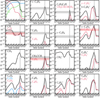 |
Fig. 1 Gas-grain astrochemical model results for the calculated abundances (relative to H2) of the most important species involved in the formation of aromatic molecules in dark clouds, shown as a function of cloud age. The horizontal gray region represent the observed abundances in TMC-1, with an arbitrary uncertainty of plus or minus a factor of 2: CH (Suutarinen et al. 2011), C2H (Sakai et al. 2010; Turner et al. 2000), c-C3H2 (Park et al. 2006; Turner et al. 2000), l-C3H3+ (Silva et al. 2023), CH3CCH (Askne et al. 1983; Irvine et al. 1981; Markwick et al. 2002; Turner et al. 1999), C3H6 (Marcelino et al. 2007), and c-C5H6 (Cernicharo et al. 2021a). The vertical gray region indicates the chemical age obtained by minimizing the distance of disagreement (Wakelam et al. 2006), which in this study involves the differences between the observed and modeled abundances of 62 species in TMC-1. |
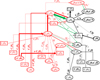 |
Fig. 2 Schematic diagram of the main neutral (black) and ionic (red or green for dissociative recombination, DR) pathways leading to the formation of aromatic species. Most DRs, typically represent the major destruction pathways for ions, are not shown because they generally do not lead to the formation of aromatic cycles. Arrow widths are proportional to the integrated total production rates. Radiative association reactions are indicated by dashed lines. Radicals are shown in boxes, and closed-shell species in circles. Observed species in TMC-1 (C3H3, l-C3H3+, C6H5CN, C6H5C2H, etc.) are highlighted in bold. |
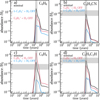 |
Fig. 3 Gas-grain astrochemical model results for l-C3H3+, CH3CCH, C6H4, C6H6, C6H5CN, and C6H5C2H in dark clouds as a function of cloud age. Solid black line: standard network results. Solid red line: nominal network excluding the gas-phase C6H5+ + H2 reaction. Solid blue line: nominal network excluding the gas-phase l-C3H3+ + H2 reaction. Horizontal shaded rectangle: observed abundances in TMC-1 with an arbitrary error of ±2: l-C3H3+ Silva et al. (2023), CH3CCH (Askne et al. 1983; Irvine et al. 1981; Markwick et al. 2002; Turner et al. 1999), C6H4 Cernicharo et al. (2021b), C6H5CN McGuire et al. (2018), and C6H5C2H (Loru et al. 2023). |
5 Conclusions
We performed a systematic survey of the chemical network leading to the formation of the first aromatic compounds in dense molecular clouds, with a particular focus on reactions producing C6Hx (x ≥ 4) species. By reassessing both ionic and neutral pathways and incorporating updated experimental and theoretical constraints, we identified a limited number of key reactions that dominate the formation of C6 aromatic species under typical dense-cloud conditions.
Our results show that the observed abundances of C6H4, C6H5CN, and C6H5C2H in TMC-1 can be reproduced when the chemistry of C3 species is treated consistently. In particular, ionic reactions involving l-C3H3+ and l-C3H5+ with C3H4, together with the neutral reaction C + c-C5H6, emerge as the dominant contributors to the formation of the first aromatic ring. These results highlight the central role of both neutral and ionic C3 chemistry, which remains one of the main sources of uncertainty in current astrochemical models.
Despite these improvements, significant uncertainties persist, especially regarding the formation and destruction pathways of CH3CCH, C3H5+ and c-C5H6, which strongly influence the overall efficiency of aromatic formation. Further laboratory measurements and theoretical studies of these key reactions at low temperatures are therefore required. Extending the present approach to larger aromatic systems will be essential for assessing whether a bottom-up gas-phase chemistry is sufficient to account for the formation of more complex polycyclic aromatic hydrocarbons in dense molecular clouds.
Acknowledgements
The work was funded by the French “Agence Nationale de la Recherche” (ANR) under grant no. ANR-22-CE29-0013 (Project iSELEC-TION).This work was also supported by the Programme National ”Physique et Chimie du Milieu Interstellaire” (PCMI) and a research grant (VIL71404) from VILLUM FONDEN.
References
- Ackermann, L., Hippler, H., Pagsberg, P., Reihs, C., & Troe, J. 1990, J. Phys. Chem., 94, 5247 [Google Scholar]
- Agúndez, M., Cabezas, C., Marcelino, N., et al. 2025, A&A, 697, A82 [NASA ADS] [CrossRef] [EDP Sciences] [Google Scholar]
- Anicich, V. G. 2003, JPL Publication-03-19, Pasadena, CA, USA [Google Scholar]
- Anicich, V. G., Blake, G. A., Kim, J. K., McEwan, M. J., & Huntress, Wesley T. J. 1984, J. Phys. Chem., 88, 4608 [Google Scholar]
- Anicich, V. G., Wilson, P., & McEwan, M. J. 2003, J. Am. Chem. Soc. Mass Spectrom., 14, 900 [Google Scholar]
- Anicich, V. G., Wilson, P. F., & McEwan, M. J. 2006, J. Am. Chem. Soc. Mass. Spectrom., 17, 544 [Google Scholar]
- Askne, J., Höglund, B., Hjalmarson, A., & Irvine, W. M. 1983, A&A, 130, 311 [Google Scholar]
- Ausloos, P., Lias, S. G., Buckley, T. J., & Rogers, E. E. 1989, Int. J. Mass Spectrom. Ion Processes, 92, 65 [Google Scholar]
- Baulch, D. L., Cobos, C. J., Cox, R. A., et al. 1994, J. Phys. Chem. Ref. Data, 23, 847 [CrossRef] [Google Scholar]
- Bergeat, A., & Loison, J.-C. 2001, Phys. Chem. Chem. Phys., 3, 2038 [Google Scholar]
- Berman, M. R., Fleming, J. W., Harvey, A. B., & Lin, M. C. 1982, Chem. Phys., 73, 27 [Google Scholar]
- Berteloite, C., Le Picard, S. D., Balucani, N., Canosa, A., & Sims, I. R. 2010, Phys. Chem. Chem. Phys., 12, 3677 [Google Scholar]
- Betts, N. B., Stepanovic, M., Snow, T. P., & Bierbaum, V. M. 2006, ApJ, 651, L129 [Google Scholar]
- Bohme, D. K., Rakshit, A. B., & Schiff, H. I. 1982, Chem. Phys. Lett., 93, 592 [Google Scholar]
- Burkhardt, A. M., Long Kelvin Lee, K., Bryan Changala, P., et al. 2021, ApJ, 913, L18 [NASA ADS] [CrossRef] [Google Scholar]
- Byrne, A. N., Xue, C., Van Voorhis, T., & McGuire, B. A. 2024, Phys. Chem. Chem. Phys., 26, 26734 [Google Scholar]
- Byrne, A. N., Shingledecker, C. N., Bergin, E. A., et al. 2026, ApJ, 998, 95 [Google Scholar]
- Caster, K. L., Selby, T. M., Osborn, D. L., Le Picard, S. D., & Goulay, F. 2021, J. Phys. Chem. A, 125, 6927 [NASA ADS] [CrossRef] [Google Scholar]
- Castiñeira Reis, M., Martínez Núñez, E., & Fernández Ramos, A. 2024, Sci. Adv., 10, eadq4077 [Google Scholar]
- Cernicharo, J., Agúndez, M., Cabezas, C., et al. 2021a, A&A, 649, L15 [EDP Sciences] [Google Scholar]
- Cernicharo, J., Agúndez, M., Kaiser, R. I., et al. 2021b, A&A, 652, L9 [NASA ADS] [CrossRef] [EDP Sciences] [Google Scholar]
- Cernicharo, J., Fuentetaja, R., Agúndez, M., et al. 2022, A&A, 663, L9 [NASA ADS] [CrossRef] [EDP Sciences] [Google Scholar]
- Cernicharo, J., Cabezas, C., Fuentetaja, R., et al. 2024, A&A, 690, L13 [NASA ADS] [CrossRef] [EDP Sciences] [Google Scholar]
- Coutens, A., Loison, J.-C., Boulanger, A., et al. 2022, A&A, 660, L6 [NASA ADS] [CrossRef] [EDP Sciences] [Google Scholar]
- da Silva, G. 2014, J. Phys. Chem. A, 118, 3967 [Google Scholar]
- Dobrijevic, M., Hébrard, E., Loison, J., & Hickson, K. 2014, Icarus, 228, 324 [NASA ADS] [CrossRef] [Google Scholar]
- Dobrijevic, M., Loison, J., Hickson, K., & Gronoff, G. 2016, Icarus, 268, 313 [NASA ADS] [CrossRef] [Google Scholar]
- Duran, R. P., Amorebieta, V. T., & Colussi, A. J. 1988, J. Phys. Chem., 92, 636 [Google Scholar]
- Fournier, J. A., Shuman, N. S., Melko, J. J., Ard, S. G., & Viggiano, A. A. 2013, J. Chem. Phys., 138 [Google Scholar]
- Frank, P., Herzler, J., Just, T., & Wahl, C. 1994, Symposium (International) on Combustion, 25, 833 [Google Scholar]
- Frisch, M. J., Trucks, G. W., Schlegel, H. B., et al. 2016, Gaussian~16 Revision C.01, Gaussian Inc., Wallingford, CT [Google Scholar]
- Georgievskii, Y., & Klippenstein, S. J. 2005, J. Chem. Phys., 122, 194103 [Google Scholar]
- Georgievskii, Y., Miller, J. A., & Klippenstein, S. J. 2007, Phys. Chem. Chem. Phys., 9, 4259 [Google Scholar]
- Goettl, S. J., Turner, A. M., Krasnoukhov, V. S., et al. 2025, Sci. Adv., 11, eadv0692 [Google Scholar]
- Goulay, F., & Leone, S. R. 2006, J. Phys. Chem. A, 110, 1875 [NASA ADS] [CrossRef] [Google Scholar]
- Hahndorf, I., Lee, Y. T., Kaiser, R. I., et al. 2002, J. Chem. Phys., 116, 3248 [Google Scholar]
- Haider, N., & Husain, D. 1993a, Berichte Bunseng. Phys. Chem., 97, 571 [Google Scholar]
- Haider, N., & Husain, D. 1993b, Int. J. Chem. Kinet., 25, 423 [Google Scholar]
- Hamberg, M., Vigren, E., Thomas, R., et al. 2011, EAS, 46, 241 [Google Scholar]
- Harrison, A. G. 1963, Can. J. Chem., 41, 236 [Google Scholar]
- Hawley, M., & Smith, M. A. 1989, J. Am. Chem. Soc., 111, 8293 [Google Scholar]
- Hawley, M., & Smith, M. A. 1992, J. Chem. Phys., 96, 1121 [Google Scholar]
- Hébrard, E., Dobrijevic, M., Loison, J.-C., Bergeat, A., & Hickson, K. 2012, A&AS, 541, A21 [NASA ADS] [CrossRef] [EDP Sciences] [Google Scholar]
- Hébrard, E., Dobrijevic, M., Loison, J.-C., et al. 2013, A&A, 552, A132 [NASA ADS] [CrossRef] [EDP Sciences] [Google Scholar]
- Herbst, E., DeFrees, D. J., Talbi, D., et al. 1991, J. Chem. Phys., 94, 7842 [Google Scholar]
- Herbst, E., Terzieva, R., & Talbi, D. 2000, MNRAS, 311, 869 [NASA ADS] [CrossRef] [Google Scholar]
- Hickson, K. M., Loison, J.-C., Nuñez-Reyes, D., & Méreau, R. 2016a, J. Phys. Chem. Lett., 7, 3641 [Google Scholar]
- Hickson, K. M., Wakelam, V., & Loison, J.-C. 2016b, Mol. Astrophys., 3, 1 [CrossRef] [Google Scholar]
- Hickson, K. M., Loison, J.-C., & Wakelam, V. 2021, ACS Earth Space Chem., 5, 824 [NASA ADS] [CrossRef] [Google Scholar]
- Hickson, K. M., Loison, J.-C., & Wakelam, V. 2024, ACS Earth Space Chem., 8, 1087 [Google Scholar]
- Hincelin, U., Wakelam, V., Hersant, F., et al. 2011, A&A, 530, A61 [NASA ADS] [CrossRef] [EDP Sciences] [Google Scholar]
- Hincelin, U., Commerçon, B., Wakelam, V., et al. 2016, ApJ, 822, 12 [NASA ADS] [CrossRef] [Google Scholar]
- Hrodmarsson, H. R., Garcia, G. A., Bourehil, L., et al. 2024, Commun. Chem., 7, 156 [Google Scholar]
- Irvine, W. M., Hoglund, B., Friberg, P., Askne, J., & Ellder, J. 1981, ApJ, 248, L113 [NASA ADS] [CrossRef] [Google Scholar]
- Jacovella, U., Loison, J.-C., Rossi, C., et al. 2026, A&A, 708, A281 [Google Scholar]
- Jones, B. M., Zhang, F., Kaiser, R. I., et al. 2011, PNAS, 108, 452 [CrossRef] [Google Scholar]
- Kaiser, R. I., Hahndorf, I., Huang, L. C. L., et al. 1999, J. Chem. Phys., 110, 6091 [Google Scholar]
- Kaiser, R. I., Zhao, L., Lu, W., et al. 2022, J. Phys. Chem. Lett., 13, 208 [Google Scholar]
- Keheyan, Y. 2001, Chem. Phys. Lett., 340, 405 [Google Scholar]
- Knight, J. S., Freeman, C. G., McEwan, M. J., Anicich, V. G., & Huntress, W. T. 1987, J. Phys. Chem., 91, 3898 [Google Scholar]
- Kocheril, G., Zagorec-Marks, C., & Lewandowski, H. 2025, Nat. Astron., 1 [Google Scholar]
- Landera, A., Krishtal, S. P., Kislov, V. V., Mebel, A. M., & Kaiser, R. I. 2008, J. Chem. Phys., 128 [Google Scholar]
- Lee, K. L. K., McGuire, B. A., & McCarthy, M. C. 2019, Phys. Chem. Chem. Phys., 21, 2946 [Google Scholar]
- Lin, Z., Talbi, D., Roueff, E., et al. 2013, ApJ, 765, 80 [NASA ADS] [CrossRef] [Google Scholar]
- Loison, J., Hébrard, E., Dobrijevic, M., et al. 2015, Icarus, 247, 218 [CrossRef] [Google Scholar]
- Loison, J.-C., Agúndez, M., Wakelam, V., et al. 2017, MNRAS, 470, 4075 [Google Scholar]
- Loison, J., Dobrijevic, M., & Hickson, K. 2019, Icarus, 329, 55 [CrossRef] [Google Scholar]
- Loison, J.-C., Rossi, C., Solem, N., et al. 2025, arXiv e-prints [arXiv:2506.13290] [Google Scholar]
- Loru, D., Cabezas, C., Cernicharo, J., Schnell, M., & Steber, A. L. 2023, A&A, 677, A166 [NASA ADS] [CrossRef] [EDP Sciences] [Google Scholar]
- Madden, L. K., Moskaleva, L. V., Kristyan, S., & Lin, M. C. 1997, J. Phys. Chem. A, 101, 6790 [Google Scholar]
- Mallo, M., Agúndez, M., Cernicharo, J., & Molpeceres, G. 2025, A&A, 704, A249 [NASA ADS] [CrossRef] [EDP Sciences] [Google Scholar]
- Manigand, S., Coutens, A., Loison, J.-C., et al. 2021, A&A, 645, A53 [EDP Sciences] [Google Scholar]
- Marcelino, N., Cernicharo, J., Agundez, M., et al. 2007, ApJ, 665, L127 [Google Scholar]
- Markwick, A. J., Millar, T. J., & Charnley, S. B. 2002, A&A, 381, 560 [NASA ADS] [CrossRef] [EDP Sciences] [Google Scholar]
- McCarthy, M. C., Lee, K. L. K., Loomis, R. A., et al. 2021, Nat. Astron., 5, 176 [Google Scholar]
- McEwan, M. J., & Anicich, V. G. 2007, Mass Spectrom. Rev., 26, 281 [Google Scholar]
- McEwan, Murray, J., Scott, Graham, B. I., Adams, Nigel, G., et al. 1999, ApJ, 513, 287 [CrossRef] [Google Scholar]
- McGuire, B. A., Burkhardt, A. M., Kalenskii, S., et al. 2018, Science, 359, 202 [Google Scholar]
- McGuire, B. A., Loomis, R. A., Burkhardt, A. M., et al. 2021, Science, 371, 1265 [Google Scholar]
- Mebel, A. M., Agúndez, M., Cernicharo, J., & Kaiser, R. I. 2023, ApJ, 945, L40 [Google Scholar]
- Miller, J. A., & Klippenstein, S. J. 2003, J. Phys. Chem. A, 107, 7783 [Google Scholar]
- Milligan, D. B., Wilson, P. F., Freeman, C. G., Meot-Ner, M., & McEwan, M. J. 2002, J. Phys. Chem. A, 106, 9745 [Google Scholar]
- Ozturk, F., Moini, M., Brill, F. W., et al. 1989, J. Phys. Chem., 93, 4038 [Google Scholar]
- Park, I. H., Wakelam, V., & Herbst, E. 2006, A&A, 449, 631 [NASA ADS] [CrossRef] [EDP Sciences] [Google Scholar]
- Petrie, S., Javahery, G., & Bohme, D. K. 1992, J. Am. Chem. Soc., 114, 9205 [Google Scholar]
- Peverati, R., Bera, P. P., Lee, T. J., & Head-Gordon, M. 2016, ApJ, 830, 128 [Google Scholar]
- Prasad, V. K., Pei, Z., Edelmann, S., Otero-de-la Roza, A., & DiLabio, G. A. 2022a, J. Chem. Theory Comput., 18, 151 [Google Scholar]
- Prasad, V. K., Pei, Z., Edelmann, S., Otero-de-la Roza, A., & DiLabio, G. A. 2022b, J. Chem. Theory Comput., 18, 4041 [Google Scholar]
- Prodnuk, S. D., Grocert, S., Bierbaum, V. M., & DePuy, C. H. 1992, Org. Mass Spectrom., 27, 416 [Google Scholar]
- Ruaud, M., Wakelam, V., & Hersant, F. 2016, MNRAS, 459, 3756 [Google Scholar]
- Ruaud, M., Wakelam, V., Gratier, P., & Bonnell, I. 2018, A&A, 611, A96 [Google Scholar]
- Sakai, N., Saruwatari, O., Sakai, T., Takano, S., & Yamamoto, S. 2010, A&A, 512, A31 [NASA ADS] [CrossRef] [EDP Sciences] [Google Scholar]
- Savic, I., & Gerlich, D. 2005, Phys. Chem. Chem. Phys., 7, 1026 [Google Scholar]
- Scott, G. B. I., Fairley, D. A., Freeman, C. G., et al. 1997, J. Phys. Chem. A, 101, 4973 [Google Scholar]
- Scott, G. B. I., Milligan, D. B., Fairley, D. A., Freeman, C. G., & McEwan, M. J. 2000, J. Chem. Phys., 112, 4959 [Google Scholar]
- Shannon, R. J., Blitz, M. A., Goddard, A., & Heard, D. E. 2013, Nat. Chem., 5, 745 [CrossRef] [Google Scholar]
- Silva, W. G. D. P., Cernicharo, J., Schlemmer, S., et al. 2023, A&A, 676, L1 [NASA ADS] [CrossRef] [EDP Sciences] [Google Scholar]
- Sita, M. L., Changala, P. B., Xue, C., et al. 2022, Astrophys. J. Lett., 938, L12 [Google Scholar]
- Smith, R. D., & Futrell, J. H. 1978, Int. J. Mass Spectrom. Ion Phys., 26, 111 [Google Scholar]
- Snow, T. P., Le Page, V., Keheyan, Y., & Bierbaum, V. M. 1998, Nature, 391, 259 [Google Scholar]
- Stranges, D., O’Keeffe, P., Scotti, G., Di Santo, R., & Houston, P. L. 2008, J. Chem. Phys., 128, 151101 [Google Scholar]
- Suutarinen, A., Geppert, W. D., Harju, J., et al. 2011, A&A, 531, A121 [NASA ADS] [CrossRef] [EDP Sciences] [Google Scholar]
- Tielens, A. 2008, Annu. Rev. Astron. Astrophys., 46, 289 [CrossRef] [Google Scholar]
- Trevitt, A. J., Goulay, F., Taatjes, C. A., Osborn, D. L., & Leone, S. R. 2009, J. Phys. Chem. A, 114, 1749 [Google Scholar]
- Tseng, C.-M., Choi, Y. M., Huang, C.-L., et al. 2004, J. Phys. Chem. A, 108, 7928 [Google Scholar]
- Turner, B. E., Terzieva, R., & Eric, H. 1999, ApJ, 518, 699 [NASA ADS] [CrossRef] [Google Scholar]
- Turner, B. E., Herbst, E., & Terzieva, R. 2000, ApJS, 126, 427 [Google Scholar]
- Vuitton, V., Yelle, R. V., & Cui, J. 2008, J. Geophys. Res., 113, E05007 [Google Scholar]
- Vuitton, V., Yelle, R. V., Lavvas, P., & Klippenstein, S. J. 2012, ApJ, 744, 11 [Google Scholar]
- Vuitton, V., Yelle, R. V., Klippenstein, S. J., Hörst, S. M., & Lavvas, P. 2019, Icarus, 324, 120 [CrossRef] [Google Scholar]
- Wakelam, V., Herbst, E., & Selsis, F. 2006, A&A, 451, 551 [NASA ADS] [CrossRef] [EDP Sciences] [Google Scholar]
- Wakelam, V., Loison, J. C., Herbst, E., et al. 2009, A&A, 495, 513 [Google Scholar]
- Wakelam, V., Ruaud, M., Gratier, P., & Bonnell, I. 2019, MNRAS, 486, 4198 [NASA ADS] [CrossRef] [Google Scholar]
- Wakelam, V., Dartois, E., Chabot, M., et al. 2021, A&A, 652, A63 [NASA ADS] [CrossRef] [EDP Sciences] [Google Scholar]
- Wakelam, V., Gratier, P., Loison, J.-C., et al. 2024, A&A, 689, A63 [NASA ADS] [CrossRef] [EDP Sciences] [Google Scholar]
- Wenzel, G., Gong, S., Xue, C., et al. 2025a, Astrophys. J. Lett., 984, L36 [Google Scholar]
- Wenzel, G., Speak, T. H., Changala, P. B., et al. 2025b, Nat. Astron., 9, 262 [Google Scholar]
- Woon, D. E. 2006, Chem. Phys., 331, 67 [Google Scholar]
- Woon, D. E., & Herbst, E. 1996, ApJ, 465, 795 [NASA ADS] [CrossRef] [Google Scholar]
- Yang, Z., He, C., Goettl, S. J., et al. 2024a, Nat. Astron., 8, 856 [Google Scholar]
- Yang, Z., Medvedkov, I. A., Goettl, S. J., et al. 2024b, Proc. Natl. Acad. Sci., 121, e2409933121 [Google Scholar]
- Zhang, F., Parker, D., Kim, Y. S., Kaiser, R. I., & Mebel, A. M. 2011, ApJ, 728, 141 [NASA ADS] [CrossRef] [Google Scholar]
- Zhao, Y., & Truhlar, D. G. 2008, Theor. Chem. Acc., 120, 215 [CrossRef] [Google Scholar]
- Zyubina, T. S., Mebel, A. M., Hayashi, M., & Lin, S. H. 2008, Phys. Chem. Chem. Phys., 10, 2321 [Google Scholar]
Appendix A Chemical network for the production of benzene and its derivatives
Chemical network relevant for benzene formation. Rate coefficients α(T/300)βexp(-γ/T) are in units of cm3 s−1. ΔHR in kJ mol−1. Reactions highlighted in grey such as 10 are not included in the network.
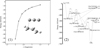 |
Fig. A.1 Relaxed energy approach (panel 1) and simplified diagram of potential energy (panel 2) for C3 + C3H5 reaction calculated at the M06-2X/AVTZ level. |
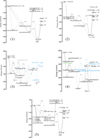 |
Fig. A.2 Simplified diagrams of potential energy for H3+ + l-C6H6(H2CHCHCHCCH) (panel 1), C2H3+ + C2H3C2H (panel 2), C2H4+ + C4H2 and C2H4 + C4H2+ (panel 3), C3H3+ + C3H3 (panel 4), and C4H3+ + C2H4 (panel 5) reactions, calculated at the M06-2X/AVTZ level. |
All Tables
Chemical network relevant for benzene formation. Rate coefficients α(T/300)βexp(-γ/T) are in units of cm3 s−1. ΔHR in kJ mol−1. Reactions highlighted in grey such as 10 are not included in the network.
All Figures
|
Fig. 1 Gas-grain astrochemical model results for the calculated abundances (relative to H2) of the most important species involved in the formation of aromatic molecules in dark clouds, shown as a function of cloud age. The horizontal gray region represent the observed abundances in TMC-1, with an arbitrary uncertainty of plus or minus a factor of 2: CH (Suutarinen et al. 2011), C2H (Sakai et al. 2010; Turner et al. 2000), c-C3H2 (Park et al. 2006; Turner et al. 2000), l-C3H3+ (Silva et al. 2023), CH3CCH (Askne et al. 1983; Irvine et al. 1981; Markwick et al. 2002; Turner et al. 1999), C3H6 (Marcelino et al. 2007), and c-C5H6 (Cernicharo et al. 2021a). The vertical gray region indicates the chemical age obtained by minimizing the distance of disagreement (Wakelam et al. 2006), which in this study involves the differences between the observed and modeled abundances of 62 species in TMC-1. |
| In the text | |
|
Fig. 2 Schematic diagram of the main neutral (black) and ionic (red or green for dissociative recombination, DR) pathways leading to the formation of aromatic species. Most DRs, typically represent the major destruction pathways for ions, are not shown because they generally do not lead to the formation of aromatic cycles. Arrow widths are proportional to the integrated total production rates. Radiative association reactions are indicated by dashed lines. Radicals are shown in boxes, and closed-shell species in circles. Observed species in TMC-1 (C3H3, l-C3H3+, C6H5CN, C6H5C2H, etc.) are highlighted in bold. |
| In the text | |
|
Fig. 3 Gas-grain astrochemical model results for l-C3H3+, CH3CCH, C6H4, C6H6, C6H5CN, and C6H5C2H in dark clouds as a function of cloud age. Solid black line: standard network results. Solid red line: nominal network excluding the gas-phase C6H5+ + H2 reaction. Solid blue line: nominal network excluding the gas-phase l-C3H3+ + H2 reaction. Horizontal shaded rectangle: observed abundances in TMC-1 with an arbitrary error of ±2: l-C3H3+ Silva et al. (2023), CH3CCH (Askne et al. 1983; Irvine et al. 1981; Markwick et al. 2002; Turner et al. 1999), C6H4 Cernicharo et al. (2021b), C6H5CN McGuire et al. (2018), and C6H5C2H (Loru et al. 2023). |
| In the text | |
|
Fig. A.1 Relaxed energy approach (panel 1) and simplified diagram of potential energy (panel 2) for C3 + C3H5 reaction calculated at the M06-2X/AVTZ level. |
| In the text | |
|
Fig. A.2 Simplified diagrams of potential energy for H3+ + l-C6H6(H2CHCHCHCCH) (panel 1), C2H3+ + C2H3C2H (panel 2), C2H4+ + C4H2 and C2H4 + C4H2+ (panel 3), C3H3+ + C3H3 (panel 4), and C4H3+ + C2H4 (panel 5) reactions, calculated at the M06-2X/AVTZ level. |
| In the text | |
Current usage metrics show cumulative count of Article Views (full-text article views including HTML views, PDF and ePub downloads, according to the available data) and Abstracts Views on Vision4Press platform.
Data correspond to usage on the plateform after 2015. The current usage metrics is available 48-96 hours after online publication and is updated daily on week days.
Initial download of the metrics may take a while.