- ... halos
![[*]](/icons/foot_motif.gif)
- Appendix is only available in electronic form at http://www.edpsciences.org
.
.
.
.
.
.
.
.
.
.
.
.
.
.
.
.
.
.
.
.
.
.
.
.
.
.
.
.
.
.
- ... mass
- In the following, we will refer to the mass as
the virial mass i.e. that enclosed in a sphere with overdensity
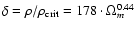 (Navarro et al. 2000).
.
.
.
.
.
.
.
.
.
.
.
.
.
.
.
.
.
.
.
.
.
.
.
.
.
.
.
.
.
.
- ... halo
- Halos have been identified
using the friends of friends algorithm with a linking length l = 0.15, mean
interparticle distances, with more than 8 particles.
.
.
.
.
.
.
.
.
.
.
.
.
.
.
.
.
.
.
.
.
.
.
.
.
.
.
.
.
.
.
- ... SKID
- http://www-hpcc.astro.washington.edu/tools/skid.html
.
.
.
.
.
.
.
.
.
.
.
.
.
.
.
.
.
.
.
.
.
.
.
.
.
.
.
.
.
.
- ...

- We note however that
 is defined against R200, the radius enclosing a sphere with overdensity equal to
200 times the critical density of the Universe, and not against
is defined against R200, the radius enclosing a sphere with overdensity equal to
200 times the critical density of the Universe, and not against
 as here;
therefore, in our cosmological model, it is always
as here;
therefore, in our cosmological model, it is always
 .
At z=0 our halo has
.
At z=0 our halo has
 .
.
.
.
.
.
.
.
.
.
.
.
.
.
.
.
.
.
.
.
.
.
.
.
.
.
.
.
.
.
.
.
- ...
coordinates
- Note that, since the disk is modelled in physical
coordinates and embedded in the cosmological halo at redshifts z=2 and
z=1, its thickness is larger than the value of the Plummer
softening we use.
.
.
.
.
.
.
.
.
.
.
.
.
.
.
.
.
.
.
.
.
.
.
.
.
.
.
.
.
.
.