![[*]](/icons/foot_motif.gif)
A&A 375, 591-613 (2001)
DOI: 10.1051/0004-6361:20010364
W. Curdt1 - P. Brekke2,3 - U. Feldman4 - K. Wilhelm1 - B. N. Dwivedi1,5 - U. Schühle1 - P. Lemaire6
1 -
Max-Planck-Institut für Aeronomie, 37191 Katlenburg-Lindau, Germany
2 -
Institute of Theoretical Astrophysics, University of Oslo, Blindern, 0315 Oslo 3, Norway
3 -
ESA Space Science Department / NASA Goddard Space Flight Center, Greenbelt, Md. 20771, USA
4 -
E. O. Hulburt Center for Space Research, Naval Research Laboratory, Washington D.C., 20375, USA
5 -
Department of Applied Physics, Banaras Hindu University, Varanasi 221005, India
6 -
Institut d'Astrophysique Spatiale, Unité Mixte CNRS - Université de
Paris XI, 91405 Orsay Cedex, France
Received 15 December 2000 / Accepted 7 March 2001
Abstract
A far-ultraviolet and extreme-ultraviolet (FUV, EUV) spectral atlas of the Sun
between 670 Å and 1609 Å in the first order of diffraction has been
derived from observations obtained with the SUMER (Solar Ultraviolet Measurements of
Emitted Radiation) spectrograph on the spacecraft SOHO (Solar and
Heliospheric Observatory). The atlas contains spectra of the average
quiet Sun, a coronal hole and a sunspot on the disk. Different physical parameters prevalent
in the bright network (BN) and in the cell interior (CI) - contributing
in a distinct manner to the average quiet-Sun emission - have their imprint on the
BN/CI ratio, which is also shown for almost the entire spectral range.
With a few exceptions, all major lines are given with their
identifications and wavelengths. Lines that appear in second order are
superimposed on the first order spectra. These lines are clearly marked in the
atlas. The spectra include emissions from atoms and ions in the temperature
range
 K to
K to
 K, i.e., continua and emission lines emitted from
the lower chromosphere to the corona. This spectral atlas, with its broad wavelength
coverage, provides a rich source of new diagnostic tools to study the physical
parameters in the chromosphere, the transition region and the corona.
In particular, the wavelength range below 1100 Å
as observed by SUMER represents a significant improvement over the spectra
produced in the past. In view of the manifold appearance and temporal variation
of the solar atmosphere, it is obvious that our atlas can only be a -
hopefully typical - snapshot.
Brief descriptions of the data reduction and calibration procedures are given.
The spectral radiances are determined with a relative uncertainty of 0.15 to
0.30 (
K, i.e., continua and emission lines emitted from
the lower chromosphere to the corona. This spectral atlas, with its broad wavelength
coverage, provides a rich source of new diagnostic tools to study the physical
parameters in the chromosphere, the transition region and the corona.
In particular, the wavelength range below 1100 Å
as observed by SUMER represents a significant improvement over the spectra
produced in the past. In view of the manifold appearance and temporal variation
of the solar atmosphere, it is obvious that our atlas can only be a -
hopefully typical - snapshot.
Brief descriptions of the data reduction and calibration procedures are given.
The spectral radiances are determined with a relative uncertainty of 0.15 to
0.30 ( )
and the wavelength scale is accurate to typically 10 mÅ.
The atlas is also available in a machine readable form.
)
and the wavelength scale is accurate to typically 10 mÅ.
The atlas is also available in a machine readable form.
Key words: Sun: UV radiation - Sun: chromosphere - Sun: transition region - Sun: corona - line: identification - atlases
The EUV portion of the electromagnetic spectrum extends from 100 Å to 1000 Å,
whereas the wavelength range from 1000 Å to 2000 Å is commonly
referred to as FUV portion in the literature.
The solar spectrum in these ranges contains not only a large number of
bright emission lines, mainly from the chromospheric and lower transition region
plasmas, i.e., formed at electron temperatures
 K, but also many
coronal lines formed at temperatures of one million kelvin and above. However, above
1216 Å, no allowed lines from the upper transition region have previously
been observed. Only a few forbidden lines that originate at coronal temperatures
in plages had been reported in limb spectra (e.g., Brueckner 1981).
In comparison, the solar spectrum in the range from 660 Å to 1200 Å includes
a large number of lines from the upper transition region and corona, in addition to
lines from the chromosphere and lower transition region (Curdt et al. 1997).
K, but also many
coronal lines formed at temperatures of one million kelvin and above. However, above
1216 Å, no allowed lines from the upper transition region have previously
been observed. Only a few forbidden lines that originate at coronal temperatures
in plages had been reported in limb spectra (e.g., Brueckner 1981).
In comparison, the solar spectrum in the range from 660 Å to 1200 Å includes
a large number of lines from the upper transition region and corona, in addition to
lines from the chromosphere and lower transition region (Curdt et al. 1997).
In this paper we present a spectral atlas representative of various solar
features observed with SUMER on SOHO. SUMER is a high-resolution telescope and
spectrograph designed to obtain stigmatic slit images with spatial and spectral
resolution elements of  1
1
 and 40 mÅ (in first order) as well
as high temporal resolution over the wavelength range from 465 Å to 1610 Å.
The accessible range depends on which of the detectors is used. While detector ``A'' can
in principle record spectra from 780 Å to 1610 Å in first order of diffraction,
the range of detector ``B'' reaches from 660 Å to 1500 Å. The gradual
lower wavelength limit (for lines observed in second order) results from
the steep fall-off of the reflectivity of the silicon carbide optics below
500 Å. The Ne VII line at 465 Å represents the shortest wavelength
identified so far with this instrument. The range from 660 Å to 805 Å can be
covered in both orders. More than 1100 emission lines are
available in the SUMER spectral range. These include resonance lines as well as
previously unobserved faint intersystem lines, which can be
detected by SUMER because of its more efficient low-noise detectors compared to
previous instruments, as discussed by Feldman et al. (1997) and Curdt et al. (1997).
Thus, the SUMER spectral atlas provides a rich source of new diagnostic tools for
probing essential physical properties of the emitting plasma and studying
electron densities, electron temperatures and elemental abundances throughout the
solar atmosphere.
and 40 mÅ (in first order) as well
as high temporal resolution over the wavelength range from 465 Å to 1610 Å.
The accessible range depends on which of the detectors is used. While detector ``A'' can
in principle record spectra from 780 Å to 1610 Å in first order of diffraction,
the range of detector ``B'' reaches from 660 Å to 1500 Å. The gradual
lower wavelength limit (for lines observed in second order) results from
the steep fall-off of the reflectivity of the silicon carbide optics below
500 Å. The Ne VII line at 465 Å represents the shortest wavelength
identified so far with this instrument. The range from 660 Å to 805 Å can be
covered in both orders. More than 1100 emission lines are
available in the SUMER spectral range. These include resonance lines as well as
previously unobserved faint intersystem lines, which can be
detected by SUMER because of its more efficient low-noise detectors compared to
previous instruments, as discussed by Feldman et al. (1997) and Curdt et al. (1997).
Thus, the SUMER spectral atlas provides a rich source of new diagnostic tools for
probing essential physical properties of the emitting plasma and studying
electron densities, electron temperatures and elemental abundances throughout the
solar atmosphere.
Earlier EUV/FUV high-resolution
instruments made use of UV-sensitive photographic plates (or film) as detectors.
Because of the fairly low efficiency of the photographic plates used, few (if any)
spectra were obtained from regions that extended more than 20
above the
limb. In comparison, SUMER has recorded line intensities extending out to
600
(Feldman et al. 1999). Off-limb features are, however, excluded here and will be
covered by a separate communication.
Given the radiometric calibration of SUMER before and during the mission (Hollandt et al. 1996; Wilhelm et al. 1997a; Schühle et al. 1998, 2000), we are able to present the absolute spectral radiances of different solar features in the wavelength range from 660 Å to 1485 Å in the first order of diffraction using the detector ``B''. For the sake of completeness, we have added the spectral range from 1485 Å to 1609 Å taken from a ``A''-detector spectrum of the quiet Sun. The calibrated radiance spectra have been compared to well-calibrated full disk irradiance measurements and reasonable agreement is found. (Dammasch et al. 1999a). The absolute value of the radiation in the EUV/FUV region is important for studying not only the solar transition region and corona, but also the atmosphere of the Earth. This radiation is an important source of energy in the upper atmosphere of the Earth and changes the temperature, chemistry and dynamics in these layers.
In Sect. 1, a brief summary is given of the most important EUV/FUV instruments and previously published solar spectral catalogues and line lists. In Sect. 2 we describe the instrument and the observation, while Sect. 3 deals with data reduction and calibration. The actual atlas is presented in Sect. 4. A list of all observed lines is added as annex to this atlas.
Space astronomy started in 1946 in the United States when W. von Braun's A4 rocket
engines (during the war named V-2 missile) became available to scientists for launching
free-flying, high-altitude observatories.
It was not surprising, under these circumstances, that a group from the US Naval
Research Laboratory (NRL) became the first to observe the ultraviolet radiation
of the Sun with a spectrograph mounted on the tail fin of a
A4 rocket. Since then, much progress has been made in solar high-resolution
spectroscopy from space (see Feldman et al. 1988). A large
number of experiments have been launched to observe the EUV and FUV portions
of the solar spectrum. High spectral and spatial resolutions were achieved
by several instruments at wavelengths above 1150 Å. At shorter
wavelengths, however, the spectral and spatial resolution were moderate
and only strong lines could be observed and/or identified.
Spectral catalogues and line lists covering the FUV and EUV portions
of the spectrum have previously been published by
Burton et al. (1967),
Burton & Ridgeley (1970),
Dupree & Reeves (1971),
Gabriel et al. (1971),
Huber et al. (1973), Malinovsky & Heroux (1973),
Kjeldseth-Moe et al. (1976),
Doschek et al. (1976),
Feldman et al. (1976a, 1976b),
Vernazza & Reeves (1978),
Dere (1978),
Feldman & Doschek (1978),
Cohen et al. (1978),
Cohen (1981),
Sandlin et al. (1986),
Brekke et al. (1991),
Feldman & Doschek (1991),
Brekke (1993),
Thomas & Neupert (1994),
Brooks et al. (1999).
In particular, two instruments made a significant impact on solar spectroscopy:
The NRL/S082B EUV spectrograph on the Skylab ATM (Apollo Telescope Mount)
and the NRL/High Resolution Telescope and Spectrograph (HRTS).
The S082B instrument operated in the 970 Å to 3940 Å range, but due to
the coating (Al + MgF2) of the optical surfaces, the instrument was
very inefficient below 1100 Å (Bartoe et al. 1977).
A spectral atlas covering the 1175 Å to 1950 Å wavelength range based on the
S082B spectrometer was published by Cohen (1981).
The 2
 60
slit defined the spatial resolution element.
Line lists based on the S082B data include those of
Doschek et al. (1976), Feldman et al. (1976a, 1976b), Feldman & Doschek (1978),
and Cohen et al. (1978), the latter being the most comprehensive.
A few very long exposures of bright solar
features resulted in useful spectra at wavelengths as short as
970 Å. A line list compiled from these observations was published
by Feldman & Doschek (1991).
60
slit defined the spatial resolution element.
Line lists based on the S082B data include those of
Doschek et al. (1976), Feldman et al. (1976a, 1976b), Feldman & Doschek (1978),
and Cohen et al. (1978), the latter being the most comprehensive.
A few very long exposures of bright solar
features resulted in useful spectra at wavelengths as short as
970 Å. A line list compiled from these observations was published
by Feldman & Doschek (1991).
During the Skylab mission, several calibration rocket (CALROC) flights were
carried out as part of a programme for calibration of the S082B spectrograph.
A FUV spectral atlas in the wavelength range from 1170 Å to 2100 Å
was prepared by Kjeldseth-Moe et al. (1976).
The CALROC atlas contains the absolute intensity of an averaged
quiet region located 300
inside the solar limb. During the
observations the slit was rastered across its linear extension, thus
averaging over an area of about 60
60
on the solar disk.
In addition the atlas contains a quiet region 50
inside the solar limb
while an active region is presented for wavelengths above 1680 Å.
During these observations, the full spatial resolution of the instrument was used.
The spectral resolution of the data is 70 mÅ and the radiance
measurements have estimated relative uncertainties of
 (1
(1  )
(Kjeldseth-Moe et al. 1976). This atlas was used as a
reference calibration source for other FUV spectra for many years.
)
(Kjeldseth-Moe et al. 1976). This atlas was used as a
reference calibration source for other FUV spectra for many years.
HRTS, which operated at wavelengths longer than 1150 Å, was the first
spectrometer to combine both high spectral resolution (50 mÅ) and
good angular resolution (1
)
with extensive wavelength and
spatial coverage (Bartoe & Brueckner 1975). It was launched several times on sounding
rockets and was part of the 5 day Spacelab 2 mission. Spectral catalogues based
on the HRTS material covering the wavelength range from 1190 Å to 1710 Å
have been published by Brekke et al. (1991) and Brekke (1993).
These atlases represented different solar features that intercepted the
950
long slit extending from disk centre to the limb. The features
included quiet Sun, plages, a sunspot (including a lightbridge), and
an explosive event. A very comprehensive line list based on the HRTS
material (and to some extent on the Skylab data) was published by Sandlin et al. (1986).
The HRTS instrument has provided very
important information on the properties of the solar chromosphere and
transition region. Excellent reviews of some of the HRTS results can be
found in the book ``The Solar Transition Region'' (Mariska 1992), and
in Cook & Brueckner (1979).
The LASP (Laboratory of Atmospheric and Space Physics) EUV spectrometer has been flown on sounding rockets (Hassler et al. 1991). This instrument has been the only solar instrument with an onboard wavelength calibration lamp to provide an absolute wavelength reference with high spectral resolution. During the first flight the wavelength range was 1520 Å to 1600 Å (760 Å to 800 Å in second order). During a later rocket flight on March 12, 1998 the spectrometer was tuned to cover the spectral ranges from 1200 Å to 1280 Å in the first order and 600 Å to 640 Å in the second order.
Before the SOHO mission, the wavelength region between 660 Å and 1175 Å remained poorly observed. Spectra covering the 300 Å to 2950 Å wavelength range with a spectral resolution of about 0.4 Å were obtained during a series of rocket flights in the late 1960s and early 1970s by Burton et al. (1967), Burton & Ridgeley (1970), and Gabriel et al. (1971). Due to low spectral resolution, line shapes could not be obtained. However, many intense solar lines were identified. Improved observations of the EUV solar spectrum in the range from 280 Å to 1340 Å were obtained with the Harvard College Observatory (HCO) spectroheliometer S055 on Skylab (Reeves et al. 1977) and smaller instruments flown earlier on Orbiting Solar Observatories OSO-4 and OSO-6 (cf. Huber et al. 1973).
The S082A on Skylab was a slitless objective-type grating spectrograph covering
the wavelength range from 170 Å to 630 Å (Tousey et al. 1977). Each exposure
included numerous images of the entire solar disk with a spatial resolution of
2
2
.
An atlas of EUV spectroheliograms from 170 Å
to 625 Å has been made available by Feldman et al. (1987).
Spectral catalogues at shorter wavelengths are those of Vernazza & Reeves (1978) and Malinovsky & Heroux (1973). Based on observations with the S055 spectrometer on Skylab, Vernazza & Reeves (1978) presented a spectral atlas of different solar features in the wavelength range from 280 Å to 1350 Å with a spectral resolution of 1.6 Å. Until now this atlas represented the most complete set of quiet-Sun spectra in this wavelength range. But due to poor spectral resolution of this spectrometer, many lines reported in this atlas are incorrectly identified. More recently an active region EUV atlas in the range from 230 Å to 450 Å was obtained with the SERTS (Solar EUV Rocket Telescope and Spectrometer) rocket experiment (Thomas & Neupert 1994). Emission lines of molecular hydrogen, which are present in sunspot spectra, have been measured and/or predicted by Bartoe et al. (1979). Brooks et al. (1999) have presented a spectral line list in the ranges 308 Å to 381 Å and 513 Å to 633 Å based on measurements of the normal incidence channel (NIS) of the SOHO/CDS instrument (Coronal Diagnostic Spectrometer, Harrison et al. 1995). A calibrated solar EUV spectrum in the same wavelength range has also been presented by Brekke et al. (2000).
SUMER is part of the SOHO mission of ESA and NASA. SOHO
was launched on December 2, 1995 by an Atlas II-AS
Centaur into a transfer trajectory to the first Lagrangian point, L1. It
was injected into a halo orbit around L1 on February 14, 1996 where,
in continuous view of the Sun, it accompanies the Earth at a sunward
distance of
 km. SOHO lost its attitude control on June 25, 1998,
but was subsequently recovered later in 1998.
km. SOHO lost its attitude control on June 25, 1998,
but was subsequently recovered later in 1998.
This section describes details of the instrument and the data acquisition which are relevant for the interpretation of the data. A comprehensive description of the instrument is given by Wilhelm et al. (1995), and first results and inflight performance characteristics are given by Wilhelm et al. (1997b) and Lemaire et al. (1997).
SUMER is a stigmatic normal-incidence spectrograph operating in the range from
465 Å to 1610 Å with optical elements made of silicon carbide
(SiC) and three normal-incidence reflections.
Only a few lines below 500 Å have so far been observed with SUMER.
The off-axis parabola telescope mirror has a plate scale in the slit plane of
6.3  m/arcsec. It can be moved to obtain disk and off-limb spectra in the lower
corona. Four slits with angular dimensions of 4
300
,
1
300
,
1
120
,
and 0.3
120
are available, the two short slits can be placed at three
different spatial positions with respect to the detector. We have used the 1
300
slit (slit #2) during the coronal-hole and quiet-Sun
observations given in this atlas. The sunspot was observed using the narrow
0.3
120
slit (slit #7).
m/arcsec. It can be moved to obtain disk and off-limb spectra in the lower
corona. Four slits with angular dimensions of 4
300
,
1
300
,
1
120
,
and 0.3
120
are available, the two short slits can be placed at three
different spatial positions with respect to the detector. We have used the 1
300
slit (slit #2) during the coronal-hole and quiet-Sun
observations given in this atlas. The sunspot was observed using the narrow
0.3
120
slit (slit #7).
Two diffraction orders can be observed by SUMER; first order lines and second order lines appear superimposed in the spectrum. A few lines could also be observed in third order (Feldman et al. 1997). The dispersion of the instrument is slightly wavelength dependent. For detector ``B'', it varies from 44.7 mÅ/pixel (first order) and 22.3 mÅ/pixel (second order) at 660 Å to 41.2 mÅ/pixel and 20.6 mÅ/pixel at 1500 Å.
The instrument is equipped with two photon-counting detectors (``A'' and ``B'')
with image encoding in cross-delay-line technique (XDL), for details see
Siegmund et al. (1994). Only one detector can be operated at a time. Each detector
has 1024 spectral and 360 spatial pixels. The pixel size of approximately
26.5 m
26.5 m is defined by the analogue electronics.
The plate scale in the focal plane of the spectrometer is 1 pixel/arcsec
resulting in an effective focal length of the instrument of 5.5 m. By centroiding,
wavelength measurements can be performed with a precision of 5 mÅ and better
if sufficient lines are available for this purpose (cf., Dammasch et al. 1999b).
The central area of the detector is coated with KBr (potassium bromide).
This coating increases the detection quantum efficiency (DQE) mainly in the
range from 900 Å to 1500 Å.
Figure 1 shows a detector readout as raw data in the spectral
range from 746 Å to 791 Å in the bottom panel. Observations of lines on both sections of the
photocathode can be used to discriminate second order lines from first order
lines, since the photocathode responsitivity changes differently for lines in
different orders. Approximately 50 spectral pixels at the extreme ends of the detectors
are covered by a mesh providing a 1:10 attentuation for H I Ly observations.
During the radiometric laboratory calibration (Hollandt et al. 1996), the responsivity of SUMER was determined for both detectors with a transfer standard light source. In-flight calibration refinements indicate that this calibration was valid and stable until the SOHO accident in June 1998. The dark signal of the detectors is extremely low, and for disk observation, scattered light can be neglected. Both detectors show non-uniformity effects typical for micro-channel-plate (MCP) intensifiers. These effects stem from the MCP structure, the inhomogeneity of the electric field, electronic non-linearities, and individual pixel deficiencies. These effects, which are very worrisome for the purpose of imaging, can be compensated to some extent by flat-field and geometric corrections. SUMER regularly generates a flat-field matrix, which can be applied either on board or on the ground.
![\begin{figure*}
\centering
\includegraphics[width=15.4cm]{f1_10571.eps}\end{figure*}](/articles/aa/full/2001/32/aa10571/img21.gif) |
Figure 1: The SUMER spectral window centred around the Ne VIII 770 Å line, with an exposure time of 300 s, obtained near disk centre of the quiet Sun. The entire detector readout is shown in the lower panel as raw data and after flat-field correction and geometrical distortion correction in the central panel. The spectral profile in the upper panel, integrated from spatial pixels 35 to 174, provides some line identifications. The changes in the continuum counts at 758 Å and 780 Å, which are caused by the different responsivity of the KBr photocathode compared to the bare MCP, are much more prominent at longer wavelengths. |
| Open with DEXTER | |
12.8 Å (in first order), were obtained sequentially.
This offset was used to record the entire spectral range on both the bare and the
KBr-coated part of the MCP, which allows us to discriminate second order lines from
first order lines. For this exercise, it was extremely helpful that the range from
670 Å to 750 Å was recorded in both orders on this detector. The spectral catalogues, presented
here, have been extracted from the KBr-coated portion of the detector, except for the
wavelength region around a telemetry gap (see below) and around H I Ly,
where only the bare part is available. Note that we have to place this
strong line on the attenuator section located at the extreme pixel positions of the
detector. Also, the extreme sections of our spectral range can only be recorded
on the bare part of the detector. The sunspot spectrum was obtained using a
modified observing sequence for faster data acquisition, which was composed of
37 spectral windows, displaced by larger increments of 20.8 Å each.
Whenever possible, the reference spectrum was preceded by a raster sequence
where the spectrometer slit moves perpendicular
to the slit direction to map an area of 120
width. This
raster contains 157 slit positions with a step size of 0.75
.
With an exposure time of 10 s at each spatial position the
complete raster scan takes 26 min. Three spectral windows centred on selected
emission lines were extracted from the detector at each slit position. Monochromatic
images at different wavelengths can be constructed from the raster sequence
by summing up the counts in the line profiles at each spatial location.
Images of the Extreme-Ultraviolet Imaging Telescope (EIT) onboard SOHO
(Delaboudinière et al. 1995) were also taken as context images and used to find the exact slit
position during the observation as well as to co-align the SUMER
observations with those obtained with other instruments. After the
raster sequence, the pointing returns to the target position at the centre of
the raster image where the reference spectrum is to be acquired. This solar
position is maintained if the solar-rotation tracker is activated.
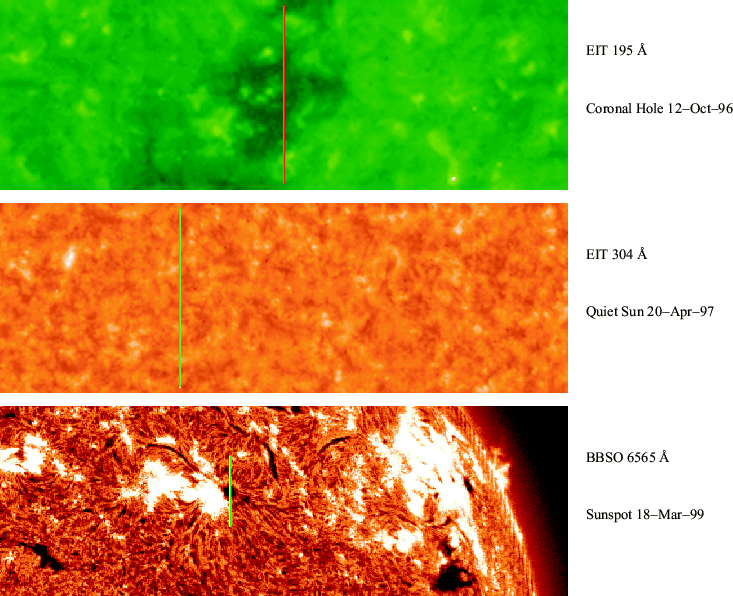 |
Figure 2:
Context images showing the position of the SUMER slit during data acquisition.
The field of view is 937
320
in all three cases. Top: The
equatorial coronal hole seen as a dark structure in the Fe XII/195 Å
channel (also seen in other EIT channels, courtesy: EIT consortium).
Centre: A quiet-Sun area near disk centre in the He II/304 Å channel
(courtesy EIT consortium).
Bottom: The leading sunspot of active region NOAA 8487 as seen on a
H I H
filtergram (courtesy: Big Bear Solar Observatory). |
| Open with DEXTER | |
About 300 SUMER reference spectra have been recorded from different locations of the Sun so far. We have selected the reference spectrum obtained on April 20, 1997 as a good choice for the quiet Sun, because neither eruptive phenomena are found in this data set nor do telemetry gaps deteriorate the data quality. From 1485 Å onwards, we have added quiet-Sun ``A''-detector spectra taken on August 12, 1996 in order to present the entire SUMER spectrum of the quiet Sun up to 1609 Å. The criteria for typical coronal-hole spectra provide grounds for debate. There seems to be a gradual scale of the strengths of coronal holes. While our spectrum, recorded near disk centre on October 12, 1996, is characterized by a depression of approximately a factor of two through the entire wavelength range, this difference is only found at wavelengths below 1000 Å in a polar coronal-hole spectrum (cf. Schühle et al. 1999). This aspect is not yet understood and needs further investigation.
We have selected the sunspot spectrum obtained on March 18, 1999 for our atlas, because this spot was one of the largest observed by SUMER so far and also because the slit seems to have been placed right through the central umbral part. However, we lost a small portion of this spectrum (2 Å) during a telemetry gap. A spectroscopic analysis of this spectrum has been published in more detail by Curdt et al. (2000a). Context images showing the position of the slit during data acquisition are presented in Fig. 2. All observational parameters are summarized in Table 1.
| target | detector | date | t0 | d | x | y | T |
 | slit | rotcomp |
| UT | h |
|
| s | pixel | # | ||||
| coronal hole | B | October 12, 1996 | 20:45 | 5:15 | -66 | -26 | 300 | 171 | 2 | on |
| quiet Sun | B | April 20, 1997 | 00:03 | 5:09 | 0 | 0 | 300 | 300 | 2 | on |
| sunspot | B | March 18, 1999 | 17:36 | 2:51 | 468 | 360 | 90 | 17 | 7 | on |
| quiet Sun | A | August 12, 1996 | 01:13 | 2:07 | 0 | 0 | 113 | 115 | 4 | on |
The spectra presented here have been recorded with detector ``B'' and compressed during downlink. After decompression, the data set was flat-field corrected and the geometric distortion of the detector removed. Finally, spectral pixels were converted to wavelengths and the intensity given in physical units. Standard procedures have been applied for the basic data processing.
As mentioned in Sect. 3.1, the responsivity of the detector is nonuniform on scales of about 20 pixels or less. Several flat-field matrices have been acquired by long exposures of three hours in the H I Lyman continuum at 880 Å while the spectrometer was defocussed. This provides a deep, although not entirely uniform exposure which the SUMER processor compares against a median-20 filtered array in order to extract all non-uniformities smaller than 20 pixels. The small-scale variation amounts to as much as 50%. This includes a pixel-to-pixel variation of approximately 20% in the spatial dimension caused by an analogue-to-digital converter differential non-linearity.
The properties of the detector vary as a function of the extracted charge as the detector is being ``scrubbed'' by the accumulated counts. Thus, the flat-field data need to be updated quite frequently. In all cases, we selected the latest flat-field image obtained before the considered observation for this process.
The fringe fields in the detector MCP-anode gap lead to a geometric distortion which makes the image of the slit shorter at the centre of the detector compared to areas closer to the edges. As a result, the spectral lines are curved (cf. Fig. 1). An artificial ``rectangular grid'' has been produced using averaged stable solar spectral lines and continuum data, from which the distortion has been parametrized. This correction is then applied to the data in order to overcome this shortcoming. The SUMER standard ``destretching procedure'' (Moran 1996) also contains a compensation for the small inclination of the slit image relative to the detector pixel direction, which is caused by a residual alignment error between detector anode and spectrometer grating.
Figure 1 shows a full-detector image centred at 769 Å before and
after the corrections for flat-field and geometric distortions are made. As seen
in the central panel, the continuum features appear to be horizontal in the
dispersion direction and the emission lines are straight to within one
spectral pixel after this correction.
Since there is no absolute wavelength reference available in the spectrometer, a wavelength scale can only be derived using solar chromospheric lines. The dispersion changes as a function of wavelength, and so each exposure needs an individual calibration. The wavelength calibration is based on identifying the position of chromospheric lines on the detector and the assumption of neglibible net Doppler flows for these lines. In quiet regions atomic lines and lines from singly ionized species are formed over a limited range in temperature and other physical conditions, and are known to show relatively small average absolute shifts (e.g., Samain 1991). Also, the observed small velocity variations along the slit in these lines indicate that these lines are very useful for establishing an absolute wavelength scale.
The pixel-to-wavelength relation is achieved by a correlation of the line centroids in the entire 43 Å window with all known reference wavelengths in this window, preferably emission lines from neutrals and singly ionized species, which are fairly strong and unblended in the solar spectrum and for which the absolute wavelengths are known with high accuracy. Since the non-linear dispersion is known very accurately from the optical design, this correlation leads to a constant offset for each exposure. In an iterative process, we inspected the preliminary wavelength calibration of each individual exposure for inconsistencies and deviations. This exercise has been very useful in eliminating misidentifications or finding problems with literature values for some of the reference lines.
The identification of reference lines is sometimes difficult due to the presence
of many overlapping lines and also due to the presence of prominent lines both in
first and second order in the SUMER spectrum. Except for a few close
blends, the line centroids could be determined by multi-Gauss fits with estimated
uncertainties of the order of 0.1 pixel (5 mÅ in first
order). The accuracy of the laboratory wavelengths of atomic lines is
generally better than 2 mÅ. Most of the laboratory wavelengths used for the
wavelength calibration were taken from Kelly (1987).
After the spectra have been calibrated, the wavelengths should be accurate to
typically 10 mÅ or 2 to 5 kms-1 on a velocity scale which is relative to
quiet-Sun chromospheric layers. We do not claim this accuracy for the
sunspot spectra, where this value can easily reach 40 mÅ in cases where either
the measured line or the reference lines or both are shifted by net Doppler flows.
It is also evident that the sunspot spectrum is more noisy, due to acumulative
effect of the narrow slit, the shorter exposure time, and the reduced number of
averaged pixels, which amounts to a factor of 100 less counts.
In several cases, our measured wavelength values, which are reported in the annexed line list, suggest that the literature values have to be revised, in particular, this is the case for wavelengths of forbidden transitions in highly-ionized species, which are difficult to measure in the laboratory. Examples of more accurate measurements, which are beyond the scope of this atlas, are reported by Dammasch et al. (1999b) and Peter & Judge (1999).
The calibration of the spectral response of the SUMER instrument is based on a comparison with a radiometric transfer standard source, which had been calibrated against the Berlin Electron-Storage ring for SYnchrotron radiation (BESSY I) as primary radiometric standard (Hollandt et al. 1996). The transfer source provided 16 emission lines with known photon fluxes of rare gases in the SUMER wavelength range. These have been used as the basis for establishing the spectral responsitivity curves of the instrument in first and second order for both detectors.
Based on the experience with previous solar UV missions the stability of the
calibration was a major concern. The combined effects of molecular organic
contamination and solar irradiation was known to cause degradation of the
optical performance in space. Therefore, a comprehensive cleanliness control
programme was made part of the SUMER project, which successfully avoided this
type of contamination. This could be verified by monitoring the sensitivity
during the mission (Schühle et al. 1998).
The responsivity of the instrument has been monitored from the moment when first
light was received on the telescope. The count rates for well known solar lines at
quiet solar conditions were measured and found to be the same as predicted
by the calibration made on the ground.
During the entire mission, calibration measurements have been carried out
at regular time intervals to track the responsivity of the instrument. The
radiance at selected wavelengths of a quiet-Sun area was monitored
to detect possible changes in the response. Despite the high variability
of the Sun as a source, these measurements confirmed the stability of the
calibration within uncertainty limits of  15% (1 )
for detector ``A'' (Wilhelm et al. 1997a) and 20% for detector ``B'',
in the range from 537 Å to 1250 Å (Schühle et al. 2000). In addition,
the spectral calibration curves could be refined during flight by measuring solar
line ratios and by observation of standard UV stars (Wilhelm et al. 1997a).
15% (1 )
for detector ``A'' (Wilhelm et al. 1997a) and 20% for detector ``B'',
in the range from 537 Å to 1250 Å (Schühle et al. 2000). In addition,
the spectral calibration curves could be refined during flight by measuring solar
line ratios and by observation of standard UV stars (Wilhelm et al. 1997a).
Thus we believe that in the wavelength range from 537 Å to 1250 Å the radiometric calibration has been valid until June 1998, the time when the loss of the SOHO attitude control occurred. Our spectrum of the sunspot was taken after recovery of the spacecraft when a change in sensitivity of the SUMER instrument was discovered. Data after the recovery are treated with a correction factor of 43% to account for the average loss of sensitivity attributable to the loss of SOHO. The uncertainty in the determination of this change affects also the overall uncertainty of the radiometric calibration after recovery which we estimate to 30%. At wavelengths longer than 1250 Å the uncertainties are 30% before and 40% after the SOHO recovery.
However, some corrections are necessary for bright lines. The count-rate
capabilities of the detectors are slightly exceeded if
bright lines are placed onto the KBr part of the photocathode, leading
to a local-gain depression of the detector channel plates and dead-time effects of
the electronics (Wilhelm et al. 2000). As a result the intensities of the lines affected
(C III 977 Å, H I Ly 1026 Å, O VI
1032 Å, O VI 1037 Å, H I Ly
1216 Å, O I
1302-1306 Å, C II 1335/1336 Å) are underestimated in the raw data.
The corrections, which amount to as much as 30% for the C III line and about
17% for the O VI, H I, O I, and C II lines have been
applied in our atlas. The given intensity of the H I Ly
1216 Å line
is only an approximation, since this bright line could only be observed with the
attenuator. Since the brightness of structures observed on the Sun may have changed
while the spectral range was covered, the intensities of lines may become less
comparable with increasing difference in wavelength.
1026 Å, O VI
1032 Å, O VI 1037 Å, H I Ly
1216 Å, O I
1302-1306 Å, C II 1335/1336 Å) are underestimated in the raw data.
The corrections, which amount to as much as 30% for the C III line and about
17% for the O VI, H I, O I, and C II lines have been
applied in our atlas. The given intensity of the H I Ly
1216 Å line
is only an approximation, since this bright line could only be observed with the
attenuator. Since the brightness of structures observed on the Sun may have changed
while the spectral range was covered, the intensities of lines may become less
comparable with increasing difference in wavelength.
In the sunspot spectrum, the photon rate of some emission lines heavily exceeded
the detector capabilities. Then, in addition to dead-time losses, some pulses
are registered at a displaced position and appear in both dimensions as ghosts
in an image. These electronic ghosts have been eliminated and appear as gaps
in our spectrum. This correction was needed for H I Ly 973 Å, C III 977 Å, O VI 1032 Å,
O VI 1037 Å, H I Ly
1216 Å,
O V 1218 Å & Mg X 1219 Å/2, N V 1238 Å,
and N V 1242 Å.
973 Å, C III 977 Å, O VI 1032 Å,
O VI 1037 Å, H I Ly
1216 Å,
O V 1218 Å & Mg X 1219 Å/2, N V 1238 Å,
and N V 1242 Å.
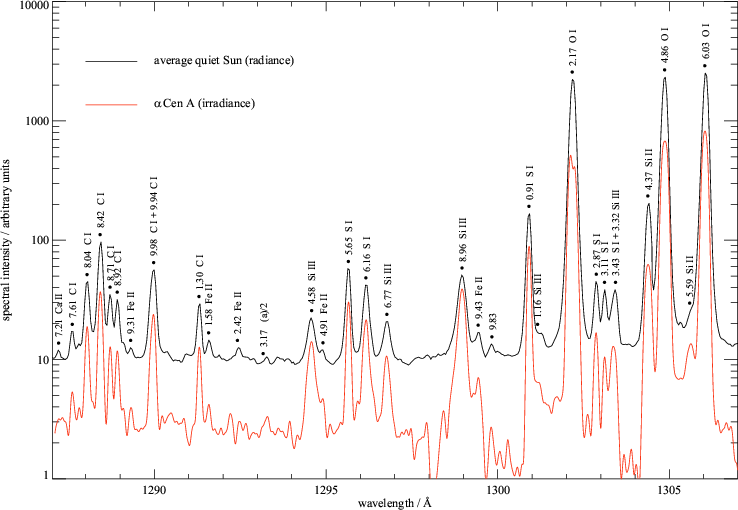 |
Figure 3:
Comparison of the FUV irradiance spectrum of -Cen A and of the quiet Sun
radiance spectrum at disk centre in the range from
1270 Å to 1310 Å. The stellar spectrum (courtesy: HST-STIS consortium) has been
degraded to the SUMER resolution by a convolution with a Gaussian of standard deviation
 mÅ. mÅ. |
| Open with DEXTER | |
To confirm the consistency of the radiometric results further, we compared our
calibration with other solar spectral
instruments which measure the irradiance from the full solar disk.
In using the spectral radiance of this atlas for a comparison with irradiance
data from the full Sun, one has to take into account contributions
from different features on the disk, such as active regions and coronal holes,
and center-to-limb variation (limb brightening), which are not resolved in
full-disk measurements. Full-disk irradiances have been reported for a number
of selected emission lines for which full-Sun raster scans have been made
with the SUMER instrument (Wilhelm et al. 1998). From these
measurements the effects of active regions, coronal hole deficiencies, and
detailed center-to-limb radiance variations have been determined. Most lines
of the solar transition region are from optically thin plasmas and show substantial
limb brightening, which leads to an average radiance of the solar
disk of approximately twice the radiance at disk centre. Therefore, the
irradiance from the full Sun will be higher than from the disk centre
for most of the lines in this spectral range. Work has been done to compare
the irradiances of the quiet Sun measured with SUMER with previous results in the
literature, and whenever a comparison could be made, we found agreement
within the uncertainty margins (Dammasch et al. 1999a).
A comparison of the SUMER radiance spectrum has also been made with the irradiance
spectrum of the Solar-Stellar Irradiance Comparison Experiment (SOLSTICE) on
the Upper Atmospheric Research Satellite (above 1150 Å) and the EUV
Grating Spectrograph (EGS) (below 1190 Å), which was flown on
sounding rockets (Woods et al. 1998a). The latter two instruments have been calibrated against the
Synchrotron Ultraviolet Radiation Facility (SURF) of the US National Institute of
Standards and Technology (NIST) as primary radiometric standard. The comparison between
the SOLSTICE/EGS irradiance spectrum and the SUMER quiet-Sun radiance spectrum
was made between 800 Å and 1600 Å at a spectral resolution of 3 Å
(Schühle et al. 1998). For most parts of the spectrum the agreement was found to be
very good, except where we have dominating second-order lines in the SUMER spectrum
and a spectral region around 950 Å, which could be attributed to an instrumental
effect (Woods 1998b). A detailed comparison between SOLSTICE and SUMER in
the range from 1200 Å to 1560 Å was given by Wilhelm et al. (1999). The comparison
of stellar FUV spectra with the spatially resolved spectra of the Sun is also of
great interest. Figure 3 compares the average quiet-Sun radiance spectrum in the
range from 1287 Å to 1307 Å to the irradiance spectrum of the solar twin G2 V
star Cen A (for details, cf. Ayres 2000) as measured by the Hubble Space
Telescope Imaging Spectrograph (HST-STIS). Both spectra are very similar,
except for second order lines, which are not present in STIS spectra. Faint
lines can be easier seen in the SUMER spectrum, which has a better photon statistic.
The STIS spectrum with its better spectral resolution is very useful for studying line
blends and line reversals due to optical thickness effects. A more detailed analysis
and a radiometric comparison are beyond the scope of this atlas.
The spectra presented in this atlas are composites of individual exposures, most of
them on the KBr photocathode.
The separation wavelengths are indicated by broken vertical lines at the bottom.
Although we have used the onboard solar rotation tracker for all spectra
presented here, there are clear indications of evolution in the network structures
observed. This has to be taken into account, if radiances of lines from different
exposures are compared. The variability of the solar atmosphere on all temporal
and spatial scales is amazing. These include periodic phenomena
(cf., e.g., Curdt & Heinzel 1998 and references therein) and explosive phenomena
(cf., e.g., Innes et al. 1997 and references therein).
To give an example, the emission measure of some lines increased by a factor of 5
during the sunspot observation as derived from a comparison of lines recorded
in both orders of diffraction (i.e., at the beginning of the sequence and at
the end of the sequence).
The spectra are displayed as profiles in different colours, the quiet-Sun spectrum
as black line, the coronal-hole spectrum as blue line, and the sunspot
spectrum as red line. In the sunspot profile the continuum background has been
moderately noise-filtered. The BN/CI ratio of the quiet-Sun spectrum is overlayed
as green, solid line using a separate axis scale. In Fig. 4 the spectrum is
presented in portions of 42 Å per page with 2 Å of overlap.
The atlas is also available in machine readable
form via ftp or the internet
This atlas represents our most up-to-date
knowledge of the solar-disk spectrum in the given spectral range. Coronal and
flare spectra have also been analyzed (Curdt et al. 2000b; Feldman et al. 2000), but are
not the subject of this communication.
Each resolved emission line is indicated by a mark, the measured wavelength in angstrom (Å), and the identification, if available. For the sake of a concise presentation, the wavelength values are restricted to three digits, one digit before and two rounded digits after the decimal point (e.g., the Ne VIII line observed at 770.423 Å reads 0.42 in first order and 0.85 in second order). The mark can be used as a cross-reference to line lists available in the literature, where additional spectroscopic information is found. Squares and circles point to line lists published on SUMER observations, circles to Curdt et al. (1997) and squares to Feldman et al. (1997), respectively. Diamonds point to the older lists of Kelly (1987), Cohen et al. (1978), Sandlin et al. (1986), and Bartoe et al. (1979). We have checked the line lists in this order and emphasize that marks are not meant in a sense of ``first identification by'', but, on the contrary, in general are pointing to the most recent list. Triangles denote lines observed for the first time or new identifications, these are mainly found in the sunspot spectrum. Open marks represent lines which are observed in second order of diffraction. Questionable identifications are marked by a question mark (?). Only 4% of the lines in the quiet-Sun spectrum remain unidentified at this stage, most of them being faint. This percentage increases to 12%, if we also consider the sunspot spectrum, which seems to be dominated by 3- to 6-fold ionized species and is more difficult to interpret. In these cases we have given the temperature classification of Feldman et al. (1997), if available (cf. Fig. 4). A list of all lines observed in the SUMER spectral range is given electronically in the Annex.
In the quiet-Sun spectrum, the SUMER slit cuts five partly sub-structured supergranular
cells. We have separated 21 pixels representative of bright network and 71 pixels of
cell interior, respectively. The BN/CI ratio, thus derived from the same exposures,
is  1 at all wavelengths. It shows an interesting variation, depending on the
particular emission line under consideration. This feature is a direct consequence
of the plasma temperature and density of the emitting source. For lines with high
formation temperature, the BN/CI ratios are not far from 1, while they can reach values
1 at all wavelengths. It shows an interesting variation, depending on the
particular emission line under consideration. This feature is a direct consequence
of the plasma temperature and density of the emitting source. For lines with high
formation temperature, the BN/CI ratios are not far from 1, while they can reach values
 for transition region lines.
The spatially resolved solar EUV/FUV spectra studied in this atlas, cover a wide spectral range from 670 Å to 1609 Å and provide a wealth of information on solar plasma structures from the upper chromosphere through the transition region to the corona. This information has, therefore, a tremendous diagnostic value for the emitting source. Together with the high spatial resolution of the SUMER spectrograph, compared to other solar EUV spectrometers flown during the last decades, plasma parameters of small solar features can be investigated. The atlas also provides an excellent reference for astrophysical applications. The SUMER spectrograph combines better spectral and spatial resolutions as well as coverage than any previous observations in the same wavelength range, and permits the extensive use of spectroscopic techniques in determining temperatures, pressures, densities and velocities in the upper solar atmosphere. The atlas also presents a powerful tool for the planning of future observations, i.e., to determine adequate integration times, to identify possible blends, and to select proper data extraction windows in upcoming solar studies.
Acknowledgements
We thank Tom Ayres for his help in retrieving the stellar data from the ST Science Institute archive. The SUMER project is financially supported by DLR, CNES, NASA and the ESA PRODEX Programme (Swiss contribution). SUMER is part of SOHO, the Solar and Heliospheric Observatory, of ESA and NASA. U. F. acknowledges financial support from NRL/ONR 6.1 basic research programs and NASA grants.
![\begin{figure*}
\centering
\includegraphics[width=14.25cm]{f4_page1a.eps}\par\includegraphics[width=14.25cm]{f4_page1b.eps}
\par\end{figure*}](/articles/aa/full/2001/32/aa10571/img30.gif) |
Figure 4:
The SUMER solar-disk spectral atlas includes profiles of the average quiet Sun (black),
an equatorial coronal hole (blue), and a sunspot (red). Resolved emission lines
are indicated by a mark, the measured wavelength in angstrom (Å),
and the identification, if available. The marks point to line lists available in the
literature, where additional information about a specific line can be found. Squares
( )
point to Feldman et al. (1997), circles ( )
point to Feldman et al. (1997), circles ( )
to Curdt et al. (1997),
diamonds ( )
to Curdt et al. (1997),
diamonds ( )
to Kelly (1987), Cohen et al. (1978), or Sandlin et al. (1986).
Triangles ( )
to Kelly (1987), Cohen et al. (1978), or Sandlin et al. (1986).
Triangles ( )
are new lines or identifications. Filled symbols denote
lines observed in first order of diffraction, open symbols are second-order lines.
Only the three least-significant digits of the wavelength values are given.
If available, unidentified lines are characterized by the temperature
classification of Feldman et al. (1997)(a: )
are new lines or identifications. Filled symbols denote
lines observed in first order of diffraction, open symbols are second-order lines.
Only the three least-significant digits of the wavelength values are given.
If available, unidentified lines are characterized by the temperature
classification of Feldman et al. (1997)(a:
 3
105; b:
3
105; b:
 3
105;
c:
4
105; d: 6
10
3
105;
c:
4
105; d: 6
10
 9
105; e:
1.4
106; f:
1.8
106. The profiles have been radiometrically calibrated
assuming first order of diffraction and the radiance axis is scaled to mW sr-1 m-2
Å-1. We have taken care of the type
of photocathode (bare or KBr) when applying the radiometric calibration to different
sections of the spectrum. For lines observed in second order, the right vertical axis is applicable.
Note, that the sensitivity ratio between both orders, which is wavelength dependent, has been
chosen for (and is only correct for) the central wavelength. Also note, that second order lines
are always superimposed on a first order background. We also display in green the BN/CI ratio,
which is a useful parameter for electron temperature classification.
New identifications for the lines at 1286.20 and 1293.14 Å as Ca V/2 and for lines 1398.06 and 1423.86 Å as S IV have been established during the production process.
9
105; e:
1.4
106; f:
1.8
106. The profiles have been radiometrically calibrated
assuming first order of diffraction and the radiance axis is scaled to mW sr-1 m-2
Å-1. We have taken care of the type
of photocathode (bare or KBr) when applying the radiometric calibration to different
sections of the spectrum. For lines observed in second order, the right vertical axis is applicable.
Note, that the sensitivity ratio between both orders, which is wavelength dependent, has been
chosen for (and is only correct for) the central wavelength. Also note, that second order lines
are always superimposed on a first order background. We also display in green the BN/CI ratio,
which is a useful parameter for electron temperature classification.
New identifications for the lines at 1286.20 and 1293.14 Å as Ca V/2 and for lines 1398.06 and 1423.86 Å as S IV have been established during the production process. |
| Open with DEXTER | |
![\begin{figure*}
\centering
\includegraphics[width=14.25cm]{f4_page2.eps}
\end{figure*}](/articles/aa/full/2001/32/aa10571/img31.gif) |
Figure 4: continued. |
| Open with DEXTER | |
![\begin{figure*}
\centering
\includegraphics[width=14.25cm,clip]{f4_page3.eps}\par\includegraphics[width=14.25cm,clip]{f4_page3b.eps}
\end{figure*}](/articles/aa/full/2001/32/aa10571/img32.gif) |
Figure 4: continued. |
| Open with DEXTER | |
![\begin{figure*}
\centering
\includegraphics[width=14.25cm]{f4_page4.eps}
\end{figure*}](/articles/aa/full/2001/32/aa10571/img33.gif) |
Figure 4: continued. |
| Open with DEXTER | |
![\begin{figure*}
\centering
\includegraphics[width=14.25cm]{f4_page5.eps}
\end{figure*}](/articles/aa/full/2001/32/aa10571/img34.gif) |
Figure 4: continued. |
| Open with DEXTER | |
![\begin{figure*}
\centering
\includegraphics[width=14.25cm]{f4_page6.eps}
\end{figure*}](/articles/aa/full/2001/32/aa10571/img35.gif) |
Figure 4: continued. |
| Open with DEXTER | |
![\begin{figure*}
\centering
\includegraphics[width=14.25cm]{f4_page7.eps}
\end{figure*}](/articles/aa/full/2001/32/aa10571/img36.gif) |
Figure 4: continued. |
| Open with DEXTER | |
![\begin{figure*}
\centering
\includegraphics[width=14.25cm]{f4_page8_new.eps}
\end{figure*}](/articles/aa/full/2001/32/aa10571/img37.gif) |
Figure 4: continued. |
| Open with DEXTER | |
![\begin{figure*}
\centering
\includegraphics[width=14.25cm]{f4_page9.eps}
\end{figure*}](/articles/aa/full/2001/32/aa10571/img38.gif) |
Figure 4: continued. |
| Open with DEXTER | |
![\begin{figure*}
\centering
\includegraphics[width=14.25cm]{f4_page10_new.eps}
\end{figure*}](/articles/aa/full/2001/32/aa10571/img39.gif) |
Figure 4: continued. |
| Open with DEXTER | |
![\begin{figure*}
\centering
\includegraphics[width=14.25cm]{f4_page11.eps}
\end{figure*}](/articles/aa/full/2001/32/aa10571/img40.gif) |
Figure 4: continued. |
| Open with DEXTER | |
![\begin{figure*}
\centering
\includegraphics[width=14.25cm,clip]{f4_page12.eps}
\end{figure*}](/articles/aa/full/2001/32/aa10571/img41.gif) |
Figure 4: continued. |
| Open with DEXTER | |
Table A.1. Line List - List of spectral lines in the wavelength range from 668 Å
to 1611 Å identified in SUMER spectra of the average quiet Sun (QS), a coronal hole (CH) and a
sunspot on disk (SS). Spectral lines observed in second order of diffraction which are also given here,
extend the lower wavelength limit to below 500 Å. For each entry we give the observed wavelengths in
angstrøm, the identification, the transition, the peak of spectral radiance,
 ,
in
mW
,
in
mW (srm2Å)-1 (incl. background), and a cross-reference to other line lists
available in the literature (cf., Sect. 5.1). For second-order lines radiance entries are generally not
provided, since the background separation in both orders of diffraction is a non-trivial task, which can
not be automated. Only a few radiance values of strong second-order lines with negligible first-order
contribution are given, which are marked by an asterisk (*). This line list complements Fig. 4
of the SUMER Spectral Atlas.
(srm2Å)-1 (incl. background), and a cross-reference to other line lists
available in the literature (cf., Sect. 5.1). For second-order lines radiance entries are generally not
provided, since the background separation in both orders of diffraction is a non-trivial task, which can
not be automated. Only a few radiance values of strong second-order lines with negligible first-order
contribution are given, which are marked by an asterisk (*). This line list complements Fig. 4
of the SUMER Spectral Atlas.